The 2026 Subaru Trailseeker is a new all-electric SUV with a deliberate identity: part family hauler, part off-road capable wagon, and the most recognizably Subaru vehicle in the brand’s growing EV lineup.
Built on a shared skateboard platform developed with Toyota, the Trailseeker arrives alongside the smaller Uncharted as a pair of electric siblings designed to expand Subaru’s zero-emission presence. Where the Uncharted leans urban and streamlined, the Trailseeker goes longer, taller, and more purposeful. The stretched rear roofline — intentionally designed to accommodate a full-size dog crate — gives the vehicle a profile that sits closer to a traditional station wagon than anything else currently in the segment.
That form follows function. Subaru kept the Trailseeker’s curb weight just under 4,400 pounds despite the expanded roofline, which is roughly 300 pounds lighter than a Hyundai Ioniq 5 XRT and nearly 1,000 pounds less than a Honda Prologue AWD Touring. That relative lightness helps the Trailseeker extract 281 miles of EPA-estimated range from a 74.7 kWh battery, respectable figures given its size. The Solterra shares the Trailseeker’s front end through the C-pillar, but Subaru stretched the rear independently to create more cargo volume without adding meaningful mass.
The standard powertrain is dual-motor all-wheel drive only — no front-wheel-drive option, unlike the Uncharted — producing 375 horsepower and offering 8.5 inches of ground clearance. Those numbers position it as a legitimate contender for buyers who actually use their vehicles on uneven terrain, not just the kind who buy Crosstreks for the look.
Charging is where the Trailseeker gives some ground. Its maximum acceptance rate is 150 kW, which trails faster-charging competitors. Subaru’s counter-argument is that the battery holds a higher rate for longer through preconditioning, with a claimed 10-to-80 percent charge time of 28 minutes. That figure wasn’t tested during the media event in Southern California, so it remains a claim rather than a confirmed experience for now.
What did get tested was the off-road course Subaru set up alongside a fleet of Uncharteds. On wet, steep, and slippery obstacles, the Trailseeker handled itself well — spinning tires less frequently than its smaller sibling despite carrying more weight. The difference wasn’t just ground clearance. Subaru tuned the Trailseeker’s all-wheel-drive system independently from the shared platform to respond to steering angle, accelerator input, front-to-rear and side-to-side torque vectoring, and variable regenerative braking. X-Mode is present via the familiar switchgear and adds a more aggressive driving character, though the system is clearly calibrated for reliable competence rather than performance theatrics.

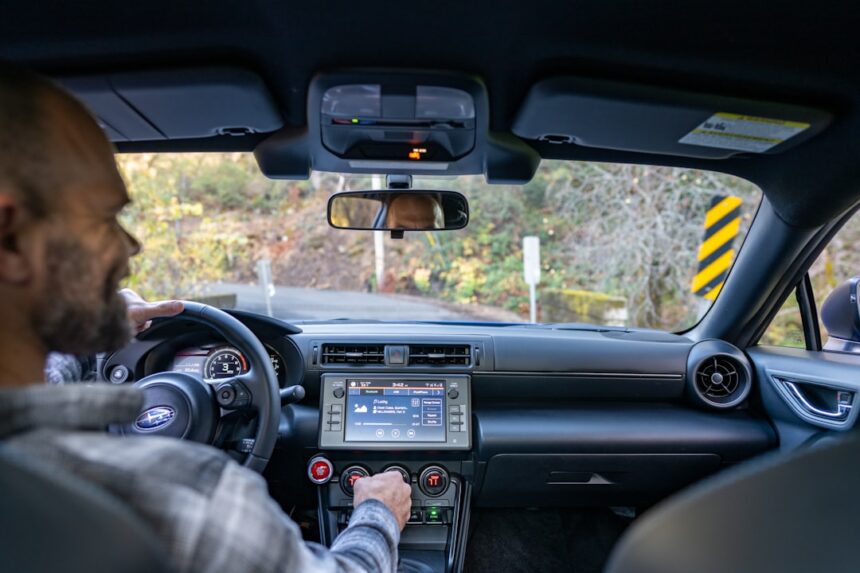
Inside, the Trailseeker offers dual wireless charging pads, USB-C ports in both rows, and both Apple CarPlay and Android Auto. The cabin aesthetic carries the plastic cladding and rugged-leaning design language consistent across Subaru’s lineup, including the Forester and Crosstrek.
Starting at $39,995, with an optional two-tone paint finish that reinforces the wagon-like silhouette, the Trailseeker makes a credible case for buyers who want an electric vehicle that still reads as a Subaru. Whether on a muddy trail or a suburban highway, the 375 horsepower available underfoot may end up being the feature that gets used most.
Photo by Michael Kahn on Unsplash
This article is a curated summary based on third-party sources. Source: Read the original article