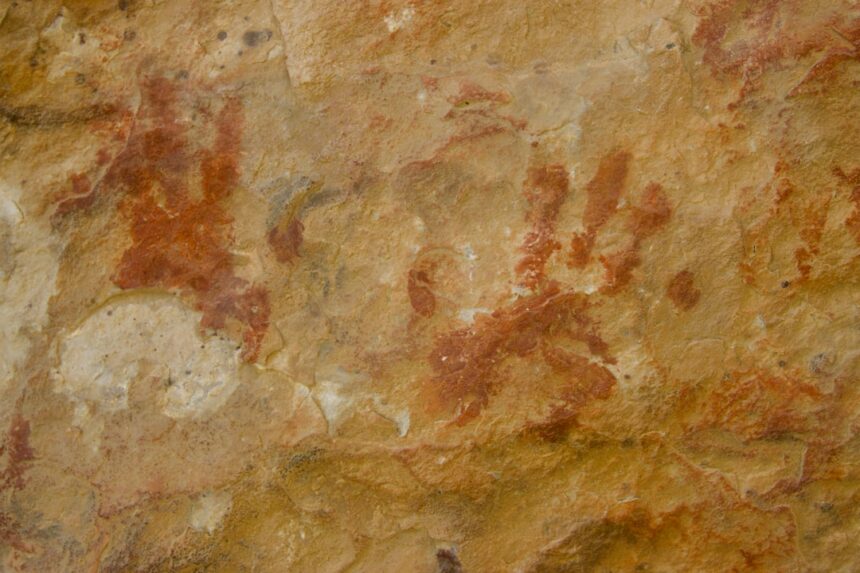
The human hand is, in evolutionary terms, one of the most consequential structures in biology. Not the brain, not bipedalism — the hand. That argument is now gaining serious scientific weight, thanks to a wave of fossil discoveries that are finally allowing researchers to piece together how human dexterity developed over millions of years.
The differences between human hands and those of our closest living relatives are more dramatic than most people realize. Chimpanzees and bonobos have long, curved fingers and short, slender thumbs — proportions optimized for swinging through trees and gripping branches. Humans have the opposite: relatively short, straight fingers and a long, robust thumb capable of moving in virtually any direction. This configuration enables what scientists call the precision grip, the ability to hold objects firmly between finger and thumb. Chimps struggle with this. We have built entire civilizations on it.
The anatomy runs deeper than bone structure. Carrie Mongle, who studies human evolution at Stony Brook University, notes that human hand proportions are genuinely unusual among primates. Cody Prang, a paleoanthropologist at Washington University in St. Louis, points to the large hand muscles in humans as central to producing forceful precision grips. A specific muscle called the flexor pollicis longus extends to the tip of the thumb in humans, allowing independent thumb movement — a feature absent in chimpanzees. These are not minor variations. They represent a fundamentally different kind of hand.
Darwin had a theory about how this happened. In *The Descent of Man*, published in 1871, he proposed that dexterous hands could only emerge after our ancestors began walking upright. As long as hands were needed for locomotion and support, fine motor control couldn’t fully develop. It was a logical argument. The problem, for most of the following century, was that there was almost no fossil evidence to test it. A handful of hominin remains, scattered stone tools from East Africa, and a long silence in the record.
That silence has started to break. New fossil finds are allowing scientists to trace how hand anatomy changed across different hominin species and across time. What’s emerging is a story with unexpected connections — not just to tool use, but to the evolution of language and the brain. Precision grip and complex cognition, it turns out, may have developed in tandem, each reinforcing the other in ways researchers are only now beginning to map.
Playing a difficult guitar solo is, anatomically speaking, a minor miracle. It requires simultaneous strength and precision, independent finger control, and a thumb that can oppose the other digits with force and accuracy. Most animals cannot come close. We do it casually, often without thinking about it. That ease obscures something remarkable — that the hand doing it was shaped, over millions of years, by pressures that go far beyond music or craft.

The hand didn’t follow the brain. It may have helped build it.
Photo by Mike Leyder on Unsplash
This article is a curated summary based on third-party sources. Source: Read the original article