The first two weeks of March offer a genuine opportunity to watch four naked-eye planets in the evening sky — no telescope required, just clear skies and a sense of where to look.
Venus is the easiest anchor point. Blazing brightly low in the west after sunset, it’s hard to miss and serves as a useful reference to locate Mercury, which hovers nearby. This stretch of March represents Mercury’s best evening apparition of 2025 for Northern Hemisphere observers. On March 8, Mercury reaches its greatest elongation — 18 degrees east of the sun — and from latitude 40 degrees north, it stands roughly 9 degrees above the western horizon about 45 minutes after sunset, sitting just 7 degrees to the lower left of Venus. Its magnitude at that point is -0.3.
The window closes quickly. Mercury fades fast: by March 12 it’s down to magnitude +0.7, and by March 16 it has dimmed to +1.9, essentially invisible to the naked eye in twilight. If Mercury is on your list, the first week of March is the time.
March 1 offers a particularly clean grouping. A half-hour after sunset, a waxing crescent moon hangs low in the west. Mercury sits about 10 degrees below and slightly to its right, shining at magnitude -1.0, while Venus glows 7 degrees to the upper right of the moon at a brilliant magnitude -4.8. Three objects worth stepping outside for.
Venus itself won’t stick around. It’s moving steadily toward inferior conjunction on March 22, when it passes 8.4 degrees north of the sun. Around that date, Venus briefly becomes observable in both morning and evening twilight — a rare transitional moment. By month’s end, it has swung into the morning sky, already 15 degrees from the sun.
Jupiter shines well up in the southern and western sky, steady and bright, requiring no special timing or orientation. Mars is higher still, climbing nearly overhead a couple of hours after sunset near the twin stars Castor and Pollux in Gemini. It’s growing gradually dimmer as Earth pulls away from it, but it remains a clear, reddish presence.

Saturn is the one absence. It reaches solar conjunction on March 12 and stays too close to the sun to observe all month. There’s an added curiosity: on March 23, Earth passes through the plane of Saturn’s ring system, a moment when the rings effectively disappear from view. Saturn will be only 10 degrees from the sun at that point, so observing a ringless Saturn isn’t feasible this time around.
A practical note on measuring the sky: a clenched fist held at arm’s length covers roughly 10 degrees of angular distance. That’s enough to navigate most of the separations described here without any equipment.
Daylight Saving Time returns on the second Sunday in March — clocks move forward one hour at 2:00 a.m., except in Arizona, Hawaii, and Saskatchewan. Worth accounting for when planning your viewing times.
The March equinox arrives at 5:01 a.m. Eastern Daylight Time on March 20, marking the start of spring in the Northern Hemisphere as the sun crosses the celestial equator heading north.
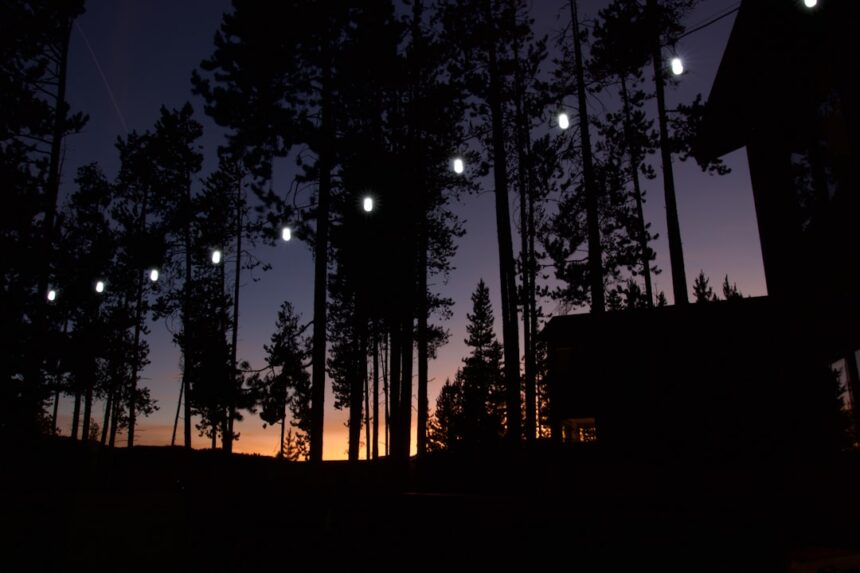
Photo by Glomad Marketing on Unsplash
This article is a curated summary based on third-party sources. Source: Read the original article