A Utah-based start-up says it has increased snowfall by 20 percent in part of the state using high-voltage electrical equipment, though independent scientists say the evidence is not yet conclusive.
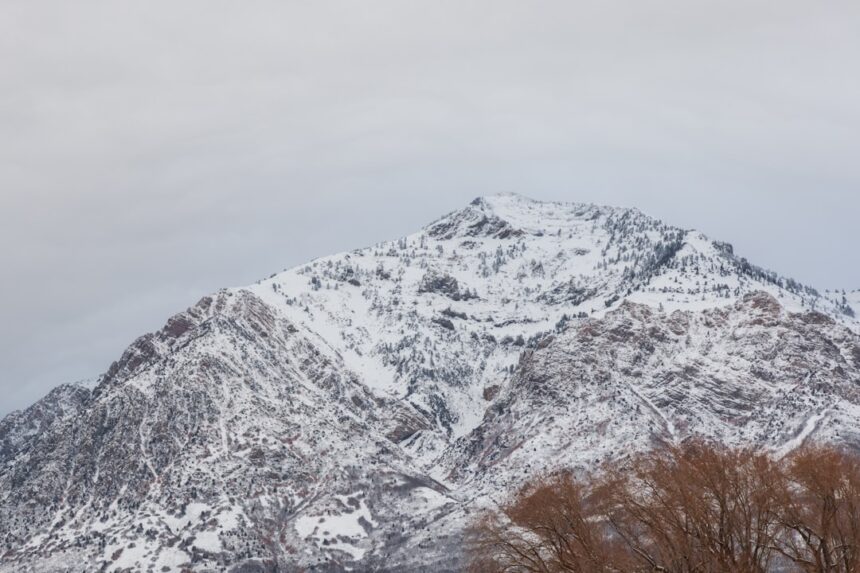
Rain Enhancement Technologies compared snowfall records across two mountain ranges during five recent dry winters. The company operated its ionising array upwind of the La Sal mountains in January, and the range received 9 centimetres more snow than would have been expected based on readings from the Abajo mountains, located 70 kilometres to the south. That gap, the company argues, represents a 20 percent increase attributable to its technology.
How the technology works
The system runs 100,000 volts of electricity through a coiled wire suspended between a pair of 8-metre pylons. Tiny aerosols, including dust, soot, and salt particles, pick up electrons as they pass near the wire. The wind carries these negatively charged particles upward into clouds.
Inside clouds, water naturally condenses onto aerosols to form droplets. Those droplets often fail to stick together and remain too small for gravity to pull them down. When droplets carry an electric charge, however, they develop an internal polarity: the negative side of one droplet attracts the positive side of another. That attraction speeds up collision and coalescence, which produces precipitation.
The company’s meteorologist, Jeff Chagnon, is clear about the limits. “Once the cloud is formed, we can get a little more water out of that cloud,” he said. The technology cannot generate clouds on its own. It also requires no chemical dispersal. “We can just flip a switch from anywhere in the world and operate for about 48 hours at a time,” Chagnon said.
Context and prior results
The claims arrive as western US states face a prolonged snow drought, raising concerns about wildfire risk and reduced flow in the Colorado River. The United Nations has warned of widespread water scarcity, with up to 3 in 4 people projected to face shortages or contamination.
Traditional cloud seeding, which involves spraying silver iodide from aircraft, is already active across nine US states. Ten states have banned or considered banning the practice, partly due to public concern over health effects and conspiracy theories around chemical dispersal. Rain Enhancement Technologies positions its approach as a chemical-free alternative.
Prior results offer limited but suggestive support. A trial the company ran in Oman between 2013 and 2018 increased rainfall by 10 to 14 percent, depending on the statistical method used. A separate experiment using a similar ion-dispersal array in China reported roughly a 20 percent precipitation boost. Cold War-era evidence also pointed in the same direction: a 2020 analysis found 24 percent more rain over the Shetland Islands on days when nuclear test radiation had ionised the atmosphere.
Scientific caution
The World Meteorological Organization warns that the ionisation approach still lacks scientific proof, even as salt-based seeding in winter clouds has been shown to affect precipitation.
Edward Gryspeerdt at Imperial College London acknowledged the Utah data is consistent with cloud modification but stopped short of endorsing it. “Because precipitation, snowfall, rainfall is incredibly variable, there is always a significant chance that the effect could have occurred by chance,” he said.
The company’s results are self-reported and have not been peer-reviewed. Comparing two mountain ranges during five winters provides a limited dataset, and natural variability in regional weather systems makes controlled attribution difficult. The underlying physics are plausible, but plausibility is not proof.
Photo by Chase Charaba on Unsplash
This article is a curated summary based on third-party sources. Source: Read the original article