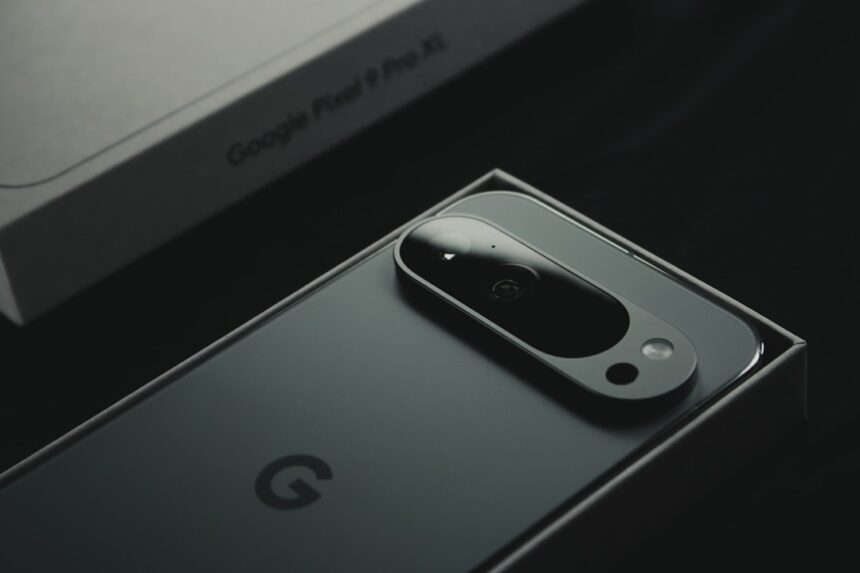
Google’s Pixel 10a arrives at $499 as a deliberately modest update, carrying over the same processor, design, and battery from last year’s Pixel 9a. What it lacks in hardware novelty, it largely compensates for with polished software and a handful of incremental refinements that keep it competitive in the mid-range market.
Familiar Ground, Minor Polish
The most visible change between the two generations is cosmetic. Google removed the plastic ring surrounding the camera module, resulting in an even flatter profile than before. The phone doesn’t rock on a flat surface, slides cleanly into a pocket, and the flush aesthetic genuinely improves the everyday feel of the device. A new Berry color joins the lineup alongside Obsidian, Fog, and Lavender.
The display now peaks at 3,000 nits of brightness, which holds up well in direct sunlight. Google also upgraded the screen glass from Gorilla Glass 3 to Gorilla Glass 7i, a meaningful durability step. After two weeks of use, no scratches were visible on the review unit, though a screen protector is still a reasonable precaution.
Charging received a genuine bump: 30-watt wired and 10-watt wireless charging replace the slower previous rates. Google claims 50 percent charge in 30 minutes with a compatible adapter, and testing confirmed that figure. The practical benefit is limited for users who charge overnight, but it helps during mid-day top-ups while traveling.
Where Google Left Points on the Table
Battery life is adequate but not impressive. Standard daily use gets through a full day, but heavier use, such as during travel, pushed the phone to near-empty by mid-afternoon. The capacity hasn’t changed from the Pixel 9a, and competing devices in this price range have demonstrated that more endurance is achievable.
The absence of Pixelsnap wireless charging magnets is a missed opportunity. Apple added MagSafe to the new iPhone 17e. Samsung offers Qi2 Ready compatibility across its lineup. The Pixel 10a supports neither, leaving a gap that Google could have closed without major engineering effort. Adding magnetic alignment at this price point would have set a useful precedent for affordable Android hardware.

Performance runs on the same Tensor G4 chip with 8 GB of RAM as the Pixel 9a. Day-to-day tasks handle smoothly, and there’s nothing lacking. But for a new generation, identical silicon is a deliberate choice, not a quiet upgrade.
The Software Case Still Holds
Google’s real argument for the A-series remains the software. Features like Hold for Me, which monitors a phone call on hold and alerts the user when a human representative answers, illustrate the kind of practical intelligence baked into the Pixel experience. That software stack, available here at $499, typically lives on phones priced significantly higher.
Long-term software support adds further weight to the value proposition, giving buyers a longer window before the phone feels obsolete.
The Pixel 10a earns its place as a solid, well-rounded device. The honest caveat is that the Pixel 9a, which has dropped as low as $349, offers nearly the same experience for substantially less. Buyers who find it at that price have a compelling reason to choose last year’s model instead.
Photo by Samuel Angor on Unsplash
This article is a curated summary based on third-party sources. Source: Read the original article