Rivian plans to sell between 20,000 and 25,000 units of its upcoming R2 SUV within roughly six months of its June launch, a pace that would place it among the fastest electric vehicle ramp-ups in U.S. history, second only to the Tesla Model Y.
The Model Y reached 20,000 sales in about four months after its March 2020 debut. Rivian’s six-month target matches the timeline the Honda Prologue took to hit that same milestone in 2024. Every other comparable EV took longer: the Chevy Equinox EV took around eight months, Ford’s Mustang Mach-E a similar stretch after its 2021 launch, and the Hyundai Ioniq 5 and Kia EV6 took approximately 10 and 11 months, respectively.
Why the R2 Cannot Afford to Stumble
Rivian CEO RJ Scaringe has described the R2 as “maybe the most important thing we’ve launched to date.” That framing is not an overstatement. The company has spent billions building toward mass-market scale, and the R2 is the product that justifies that spending. A slow sales ramp would raise serious questions about the entire strategy and could push shareholders toward the exit.
The R2 is priced to start at $45,000, positioning it as a more accessible option in a segment where inventory of comparably priced EVs remains thin. Scaringe has argued that the current U.S. market, stripped of the $7,500 federal EV tax credit Congress eliminated last September and reshaped by looser emissions regulations, actually favors Rivian. The reasoning: fewer competitors are launching new electric vehicles, leaving a gap at the affordable end of the market.
Pricing Questions Linger Before the Launch Event
Rivian removed the “Starting at $45,000” language from the R2 section of its website in early February. The company told reporters it remains “committed” to that base price, but the launch version arriving in June will be a dual-motor, higher-trim model that will almost certainly carry a higher sticker. Full pricing details are expected at a company event on March 12.
That gap matters. A lower entry price improves the odds of strong early sales, but buyers may not see the $45,000 version for some time after launch.

Market Conditions Cut Both Ways
The broader EV environment is complicated. President Trump’s tariffs have pushed up vehicle costs across the board, including Rivian’s existing lineup. Major automakers are scaling back or canceling some electric vehicle programs under lighter emissions requirements. At the same time, those retreats leave room for the R2.
Several competitive electric SUVs priced near the R2, including Volvo’s EX60, BMW’s iX3, and the Mercedes-Benz GLC, are not expected to reach the U.S. market until later in 2025. According to Edmunds consumer insights analyst Joseph Yoon, that timing gives the R2 a window of competitive advantage in the compact-to-mid-size electric SUV space.
Whether Rivian can actually execute at the pace it has promised is the central question. The company’s production history has included slow ramps and operational challenges. The R2 launch will test whether those lessons translated into a more disciplined manufacturing operation, at a moment when the stakes for getting it right have never been higher.
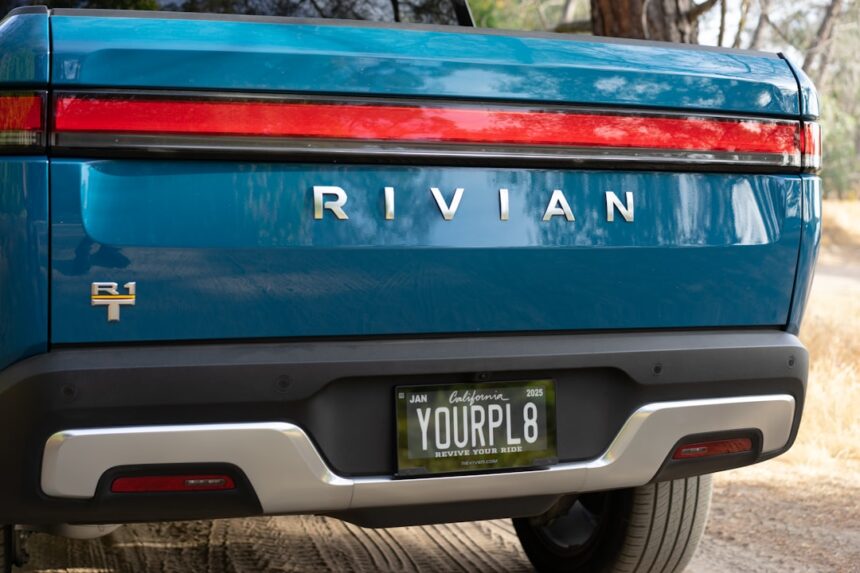
Photo by Clayton Cardinalli on Unsplash
This article is a curated summary based on third-party sources. Source: Read the original article