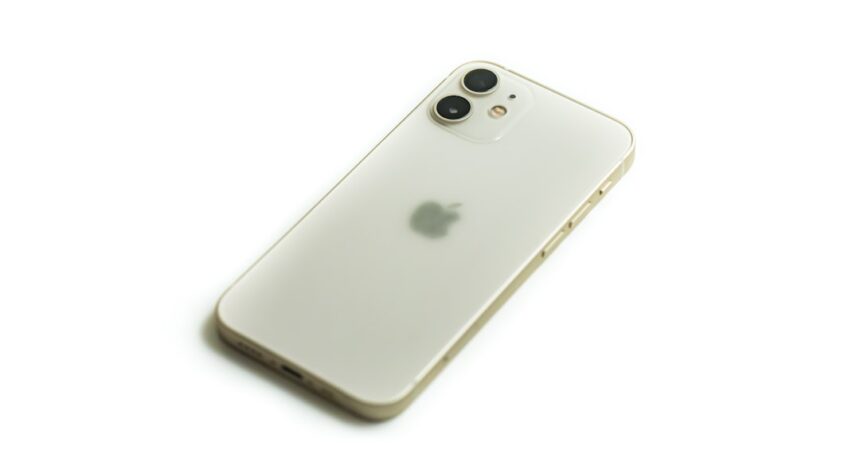
The iPhone did not begin as a phone. The product that set in motion one of the most consequential consumer electronics launches in history started as a tablet experiment, born from frustration at a dinner party and assembled from borrowed parts in a design studio at Apple’s Infinite Loop campus.
That origin story, pieced together from accounts by Apple engineers and executives, reveals a product shaped as much by accident and irritation as by deliberate strategy.
The Tuesday Meetings Nobody Knew About
In early 2003, Duncan Kerr, a British designer who had joined Jony Ive‘s industrial design studio in 1999, began convening a small group of interface designers and input engineers every Tuesday. The goal was simple: the “point mouse, click button” interaction model was 25 years old, and Kerr wanted to find something better.
His team cycled through camera-driven systems, spatial audio, haptics, and 3D screens. Kerr was most drawn to finger-based manipulation of on-screen objects. But paper mockups had limits.
To build something real, the team turned to a Delaware company called FingerWorks. Its founders, Wayne Westerman and professor John Elias, had created a flat trackpad that could detect multiple finger touches simultaneously and translate gestures into commands. Twist your fingertips like opening a jar, and the device registered “Open.” The product was called the iGesture NumPad, measuring 6.25 x 5 inches.
In late 2003, Apple commissioned FingerWorks to produce a larger version: 12 x 9.5 inches. Kerr’s team mounted an LCD projector on a tripod above the pad in the design studio at Infinite Loop 2, taped white paper over the surface for brightness, and connected it to a nearby Power Mac. What followed, by all accounts from those present, was immediately compelling. Sliding a finger moved an icon. Spreading two fingers enlarged a photo. Two hands could tap, move, and stretch objects at once.

Kerr showed it to Ive. Ive showed it to Steve Jobs. Everyone who saw it agreed it was the future. Of what, exactly, remained unclear.
A Dinner Party Changes Everything
The catalyst arrived in late 2005. Jobs attended the 50th birthday party of a Microsoft engineer, the husband of a friend of his wife, Laurene. Over dinner, the engineer argued that Microsoft had solved computing’s future with a stylus-driven tablet. Jobs had heard the pitch before, many times. He came home furious.
“Fuck this,” he said, according to Walter Isaacson‘s biography. “Let’s show him what a tablet can really be.”
At the next Monday executive meeting, Jobs arrived determined. The directive was direct: build a real tablet, and do it without a stylus. “God gave us 10 styluses,” he said repeatedly, holding up his fingers. The FingerWorks multi-touch demo, sitting idle for two years, suddenly had a destination.
Ive‘s team built prototype multi-touch tablets using iBook laptop components. The project was alive. But the phone, not the tablet, would reach the world first.
What the Demo Proved
The significance of the FingerWorks chapter is not just biographical. It illustrates how Apple’s internal culture of undirected experimentation created an asset that waited for the right problem. Myra Haggerty, Apple’s sensors VP, described the dynamic plainly: “There’s hundreds of little startups that are just poking around, doing stuff.”
Kerr’s Tuesday group had no specific product mandate. They were solving for curiosity. The multi-touch interface they developed in a design studio, using a projector on a tripod and a sheet of white paper, eventually became the defining interaction model of the modern smartphone era.
The iPhone that appeared in January 2007, confident and seemingly inevitable, had been years in the making and owed its existence, in part, to a piano player with a repetitive stress injury and an irritating dinner conversation about a stylus.
Photo by Tyler Clemmensen on Unsplash
This article is a curated summary based on third-party sources. Source: Read the original article