Bird populations across North America are not just declining. The rate of that decline is speeding up, concentrated in three distinct regions of the United States, according to a study published February 26 in the journal Science.
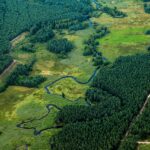
The research found that wild bird numbers fell at an accelerating rate in California, the Midwest, and the Mid-Atlantic between 1987 and 2021. High-intensity agriculture consistently emerged as the strongest predictor of where declines were picking up pace.
What the Data Shows
The study drew on data from the North American Breeding Bird Survey, an annual monitoring program conducted by professional biologists and trained volunteers who walk fixed routes and record every bird they encounter. Researchers focused on routes with sufficient data to calculate rate-of-change over 35 years, covering 261 species primarily within the United States.
Across all surveyed species, overall bird abundance dropped by at least 15%. Significant declines were documented in 122 of those species. Accelerating declines were recorded in 63 species, roughly a quarter of those studied.
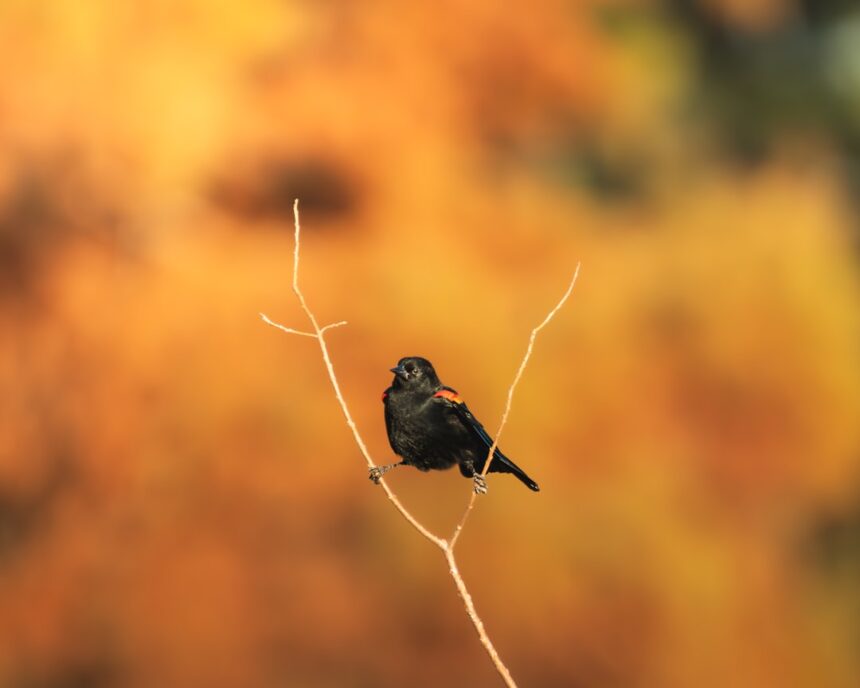
Familiar birds were not spared. Red-winged blackbirds, house finches, and American crows all showed accelerating losses. These are not rare or fragile species. Their decline carries particular weight precisely because of how common they once were.
Acceleration, Not Just Decline
“We are not talking about the decline but the acceleration of the decline,” said François Leroy, the study’s lead author and a postdoctoral researcher in macroecology at The Ohio State University. “We see that this decline is getting faster and faster with the intensification of human activities.”
That distinction matters. A steady decline is a problem. A decline that compounds over time is a different kind of problem entirely.
The researchers also found that declines were stronger in areas experiencing rising temperatures, pointing to climate change as a contributing factor alongside agricultural pressure.
Agriculture as a Signal, Not a Proven Cause
The study identifies a correlation between intense agricultural activity and accelerating bird loss, but it stops short of establishing direct causation. It does not specify which agricultural practices are responsible. What it does show is that signs of high-intensity farming were the most reliable predictor of accelerated decline, a pattern that echoes findings from similar research conducted in Europe.
Birds play functional roles in their ecosystems, distributing plant seeds and regulating insect populations. Their loss carries consequences well beyond the species themselves.
A Steeper Drop Than Previously Measured
The 15% decline recorded in this study appears more conservative than earlier estimates, but the methodology differs. A 2019 study, also published in Science, estimated that 2.9 billion individual birds disappeared from North America between 1970 and 2017, representing a 29% reduction in total population.
The new research does not calculate total birds lost across the continent. Its focus is specifically on the rate of change along surveyed routes, making direct comparisons difficult. But taken together, both studies point in the same direction.
The acceleration documented here is what separates this research from earlier work. Scientists have tracked falling bird numbers for decades. This study shows those numbers are falling faster than before, and in identifiable places, tied to identifiable pressures.
Photo by Dmytro Koplyk on Unsplash
This article is a curated summary based on third-party sources. Source: Read the original article