BYD has unveiled a battery system capable of charging from 10% to 80% in five minutes, a speed that would largely neutralize one of the last practical advantages held by gasoline-powered vehicles. The catch: the technology only works when paired with BYD’s own new 1.5-megawatt Flash Charging infrastructure, which currently exists almost exclusively in China.
The new system, called Blade Battery 2.0, will debut in the Yangwang U7, a full-size luxury sedan. BYD says the pack can go from 10% to 70% in five minutes, and reaching near-full charge takes roughly nine minutes total. Even at –4°F (–20°C), the pack charges from 20% to 97% in under 12 minutes. In the U7, that battery delivers a range of just over 1,000 kilometers.
The Infrastructure Constraint
The five-minute figure is real, but it requires a 1.5-megawatt charger to achieve it. For context, the fastest chargers currently common in the United States and Europe top out at 350 kilowatts, though 500-kilowatt units are beginning to roll out in limited numbers. BYD’s Flash Charging stalls use overhead tower-mounted cables that can serve either side of a vehicle, a design choice likely driven by the sheer weight of cables rated to handle that level of power.
BYD says it has 4,200 Flash Charging stations already operating across China, with a target of approximately 16,000 more by the end of the year. The company also plans to attach grid-scale batteries to these installations to reduce strain on local power infrastructure.
Why LFP, and Why Now
The Blade Battery 2.0 uses lithium iron phosphate chemistry, known as LFP. The appeal is cost: LFP packs currently run about $81 per kilowatt-hour, compared with $128 per kilowatt-hour for nickel manganese cobalt packs, according to BloombergNEF. LFP avoids expensive metals like cobalt and nickel entirely.
The tradeoff has traditionally been energy density. LFP stores less energy per unit of weight than competing chemistries, which limits range and has largely confined the chemistry to lower-cost models in Western markets. BYD is making a direct bet that ultra-fast charging can offset that limitation and make LFP viable in premium segments.

Competitive Pressure Behind the Announcement
BYD remains the world’s largest EV manufacturer, but its position is under pressure. The company reported that combined January and February 2026 sales fell roughly 36% compared to the same period a year earlier, as rivals including Li Auto, Xpeng, Xiaomi, and Zeekr continue pushing new models into a competitive domestic market. Tesla is also working to reclaim ground.
The Blade Battery 2.0 announcement arrives in that context. Flash charging technology gives BYD a clear marketing story at a moment when it needs to differentiate its vehicles beyond price. The Shenzhen-based company has run an aggressive pricing strategy through an ongoing price war among Chinese automakers, and a technical leap in charging speed offers a different kind of leverage.
Warren Buffett’s Berkshire Hathaway bought a 10% stake in BYD in 2008 for $230 million. Berkshire sold its last shares in 2025, exiting with more than 20 times the original investment. The company it sold is considerably different from the one it bought: a global EV leader now racing to stay ahead of the competition it helped inspire.
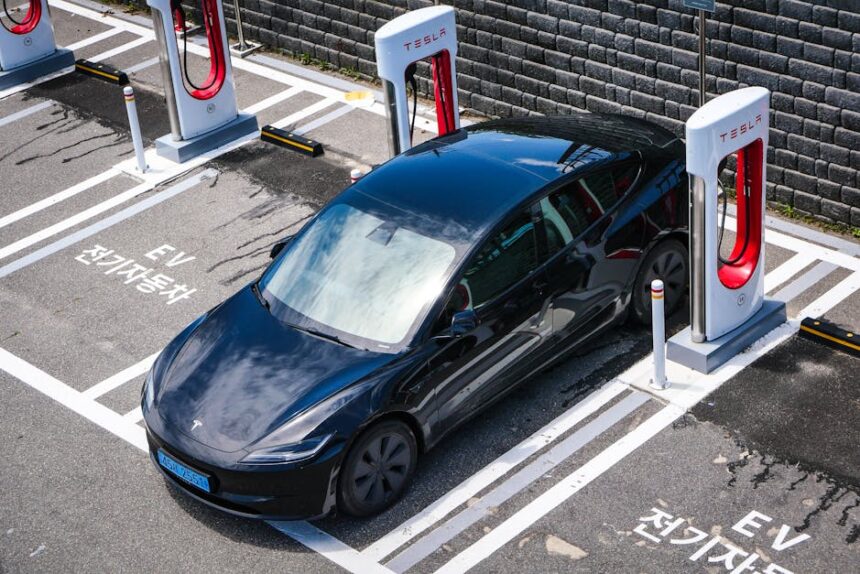
Photo by DaeYeoung Ahn on Pexels
This article is a curated summary based on third-party sources. Source: Read the original article