Liver fibrosis and cirrhosis affect millions of people who show no outward symptoms until the damage is already severe — making early detection one of the central unsolved problems in hepatology. Researchers at Johns Hopkins Medicine have now developed a blood test that may change that calculus significantly.
Scientists at the Johns Hopkins Kimmel Cancer Center created an AI-driven liquid biopsy that reads genome-wide patterns in cell-free DNA fragments circulating in the blood. Rather than hunting for specific gene mutations, the system examines how DNA pieces break apart and where they appear across the entire genome — an approach the team calls fragmentome technology. The study, partly funded by the National Institutes of Health, was published on March 4 in Science Translational Medicine.
The scale of the analysis is notable. Researchers performed whole genome sequencing on cfDNA samples from 1,576 individuals with liver disease and other medical conditions. Each sample yielded roughly 40 million DNA fragments spanning thousands of genomic regions, including repetitive DNA regions that have rarely been studied in this context. Machine learning algorithms then processed that data to identify fragmentation signatures linked to disease.
Why This Approach Is Different
Most liquid biopsy tests scan for cancer-associated mutations in specific genes. The fragmentome method sidesteps that entirely. According to the announcement, this is the first time the technology has been systematically applied to chronic diseases unrelated to cancer — a meaningful expansion from its previous use in oncology.
“The fact that we are not looking for individual mutations is what makes this study so powerful,” said first author Akshaya Annapragada, an M.D./Ph.D. student in the Velculescu lab. “We are analyzing the entire fragmentome, which contains a tremendous amount of information about a person’s physiologic state.”
The resulting classification system detected early liver fibrosis, advanced fibrosis, and cirrhosis with high sensitivity. That matters because liver fibrosis, caught early, is reversible. Left undetected, it progresses to cirrhosis and raises the risk of liver cancer.

Victor Velculescu, M.D., Ph.D., co-director of the cancer genetics and epigenetics program at the Kimmel Cancer Center and co-senior author of the study, framed the stakes directly: “For many of these illnesses, early detection could make a profound difference, and liver fibrosis and cirrhosis are important examples.”
Broader Potential Beyond the Liver
The research team — also co-led by Robert Scharpf, Ph.D., professor of oncology, and Jill Phallen, Ph.D., assistant professor of oncology — suggests the fragmentome framework could extend to other chronic conditions. Because the method captures what the researchers describe as a person’s overall physiologic state, they say machine learning could be used to build classifiers for many different health conditions beyond liver disease.
The study notes that the approach may also detect broader indicators of chronic disease that could eventually elevate cancer risk, connecting the liver-focused findings back to the team’s earlier oncology work.
According to the study, the next step is applying this DNA fragmentation analysis to additional chronic disease categories beyond liver fibrosis and cirrhosis.
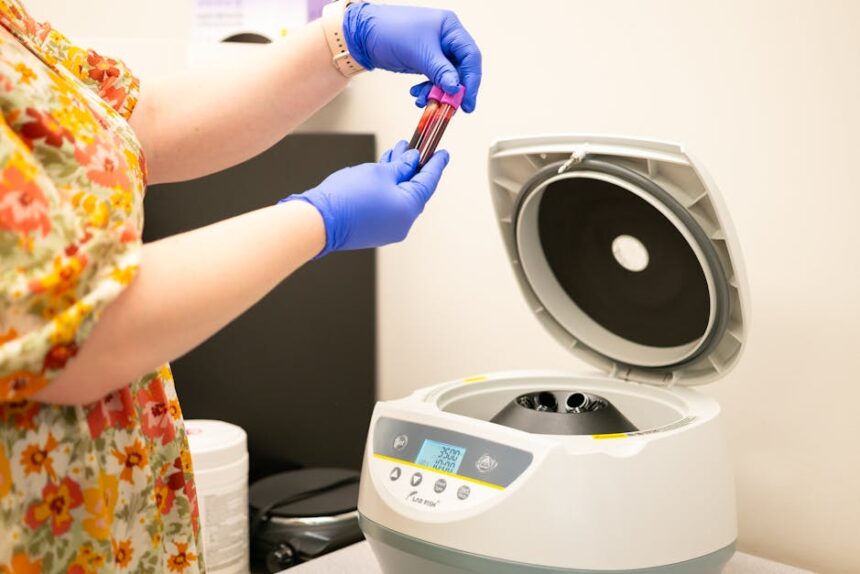
Photo by Sahil Singh on Pexels
This article is a curated summary based on third-party sources. Source: Read the original article