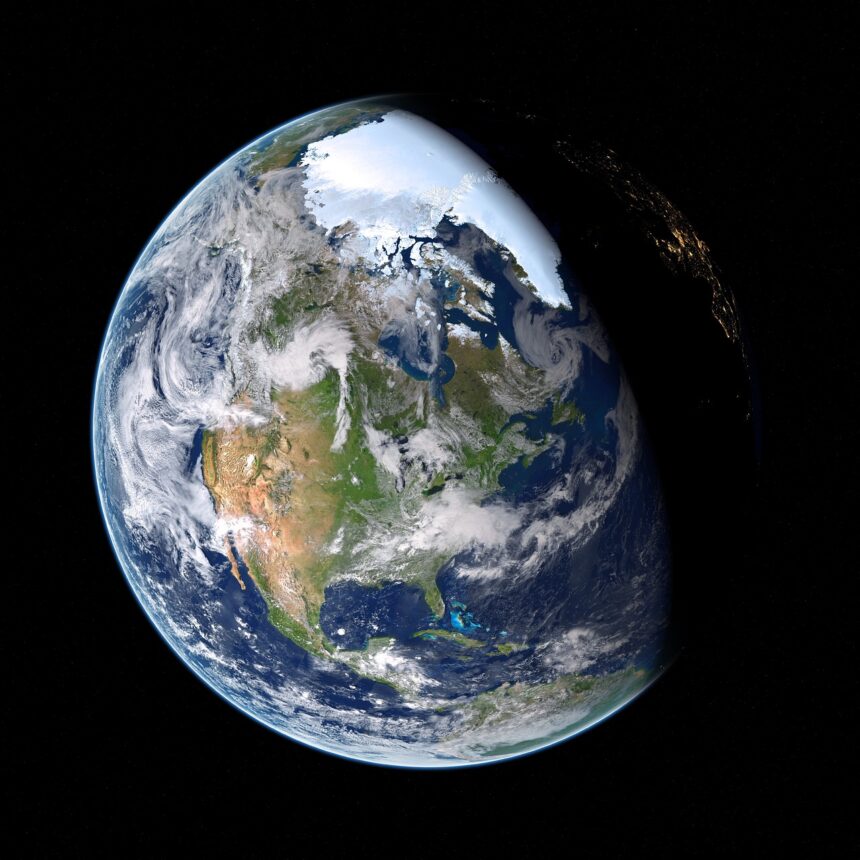
The warming trend “nearly doubled after 2014.” That is not a forecast or a projection. It is the central finding of a study published in Geophysical Research Letters, and it carries a 98% certainty rate consistent across every dataset and analytical method the researchers tested.
Stefan Rahmstorf, head of Earth system analysis at the Potsdam Institute for Climate Impact Research in Germany, and co-author Grant Foster, a retired climate analyst, built their case around a specific methodological choice: remove the noise. Natural climate drivers — the El Niño-Southern Oscillation cycle, volcanic eruptions, and solar variations — were stripped from five established global temperature datasets, including records from NASA, the National Oceanic and Atmospheric Administration, and Berkeley Earth. What remained was the underlying human-driven signal.
The numbers that emerged from that process are stark. Between 1970 and 2015, the average warming rate held at just under 0.2 degrees Celsius (0.36 degrees Fahrenheit) per decade. Over the past ten years, the researchers calculated that figure at 0.35 C (0.63 F) per decade — a near-doubling of the rate within a single decade.
A Signal Hidden Behind the Noise
The core challenge in climate attribution has always been separating what humans are doing from what the planet does on its own. El Niño years push temperatures up; major volcanic eruptions temporarily cool the surface. These swings create statistical interference that can mask or mimic long-term trends. Rahmstorf described the team’s approach to Live Science as finding a better “signal-to-noise ratio” to give the underlying trend “increased visibility.”
The study, published on March 6, claims to be the first to identify a “statistically significant acceleration of global warming” since 2015 using this method. Researchers then constructed a decade-by-decade model going back to 1895 to estimate how warming rates have shifted over time. The acceleration flagged after 2015 showed up across all five datasets.
What the Acceleration Implies
The practical consequence Rahmstorf points to is timing. “The acceleration of the global warming rate means we will cross the 1.5°C [2.7 degrees Fahrenheit] limit earlier,” he said, noting that even the researchers were surprised by the scale of the surge. If the current rate holds, both this paper and prior research point to that threshold arriving sooner than earlier models projected.

The broader scientific context the study sits within is one researchers have noted for years: the magnitude and pace of warming over the past 150 years has already exceeded the magnitude and pace of changes recorded over the past 24,000 years, a span that includes the end of the last ice age. The new findings do not contradict that picture. According to the announcement, not all scientists agree with the paper’s conclusions, though the study does not detail the specific points of disagreement.
Photo by Pixabay
This article is a curated summary based on third-party sources. Source: Read the original article