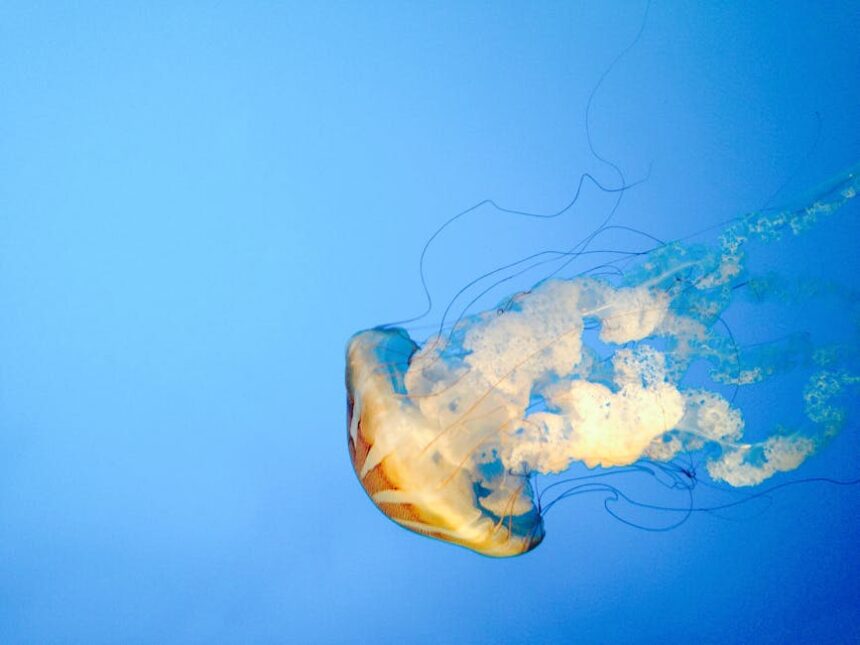
Comb jellies appeared in Earth’s oceans roughly 550 million years ago. New research suggests they may have been carrying a primitive brain the entire time.
A morphological study published in Science Advances by the Burkhardt group at the Michael Sars Centre, University of Bergen, examined a sensory structure called the aboral organ — a small, specialized structure that allows comb jellies to detect gravity, pressure, and light.
Using volume electron microscopy in collaboration with Oxford Brookes University‘s Maike Kittelmann, researchers built detailed 3D reconstructions of the organ’s interior. What they found went well beyond what earlier studies had described.
17 Cell Types, 11 Never Seen Before
The aboral organ contains 17 distinct cell types. Eleven of those — including secretory and ciliated varieties — had never been identified before, according to the announcement.
First author Anna Ferraioli, a postdoctoral researcher at the Michael Sars Centre, described the moment of discovery. “I was amazed almost immediately by the morphological diversity of the aboral organ cells,” she said. “The AO has a striking complexity when compared to apical organs of cnidarian and bilaterian. It is so unique!”
That cellular variety confirms the organ operates as a multimodal sensory system — one capable of processing multiple types of input simultaneously.

Wired In Two Ways
The organ does not work in isolation. Comb jellies possess a nerve network made of fused neurons that runs continuously through the body. Researchers found that this network forms direct synaptic connections with cells inside the aboral organ, creating a two-way communication pathway.
Many cells within the organ also carry large numbers of vesicles, suggesting they release chemical signals broadly through a process called volume transmission. The organ appears to use both synaptic and non-synaptic signaling at once — a hybrid communication system.
Group leader Pawel Burkhardt framed the implications directly. “Our study profoundly enhances our understanding of the evolution of behavioral coordination in animals,” he said.
Ferraioli was careful about the comparison to human neuroscience. “I would say that the AO is definitely not like our brain, but it could be defined as the organ that ctenophores use as a brain,” she said.
The team also examined developmental gene expression in comb jellies. Many genes that shape body organization in other animals are present in these organisms, but their expression patterns differ substantially — a detail the study flags without fully resolving.
The broader implication: centralized nervous systems may have evolved independently in separate animal lineages, and may have appeared earlier in evolutionary history than the field has assumed.
Photo by m.s. sunday on Pexels
This article is a curated summary based on third-party sources. Source: Read the original article