Oil prices were already climbing before last week, and insurance premiums on Gulf shipping had begun rising the moment the first strikes landed. The situation has since moved well beyond those early calculations.
The United States and Israel launched strikes against Iran, killing Supreme Leader Ayatollah Ali Khamenei. Since then, Israel has hit Iranian fuel depots, while Iran has targeted Gulf neighbors’ oil and gas infrastructure in retaliatory strikes. Iran‘s paramilitary Revolutionary Guard issued a direct threat: it would “not allow the export of even a single liter of oil from the region to the hostile side and its partners until further notice.”
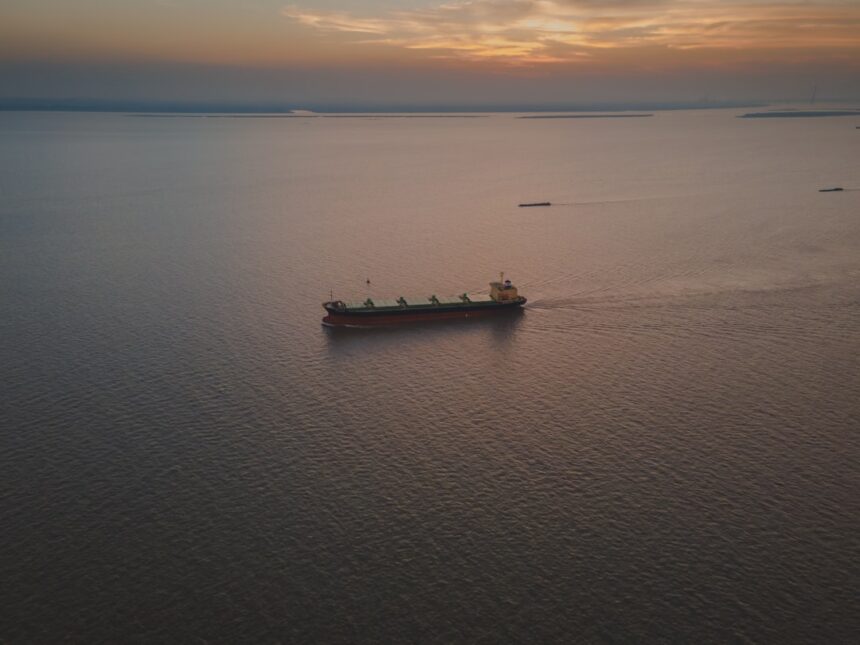
The Strait of Hormuz — through which one-fifth of global petroleum consumption and liquefied natural gas trade used to move — is now reportedly being mined by Iranian forces. According to the report, virtually no tanker traffic is currently passing through the strait.
From Insurance Costs to a Safety Crisis
Reed Blakemore, director of research and programs at the Atlantic Council Global Energy Center, draws a sharp distinction between where things stood at the conflict’s outset and where they stand now. “We’ve moved from that to actual concerns around the security of passing through the straits in the first place,” he says. “This is no longer an insurance cost issue as much as it is a safety and security issue.”
Countries are already beginning to shut in production as a direct result. The market reaction has been swift. When Asian markets opened on Sunday, oil crossed $100 a barrel and climbed to nearly $120 a barrel — a response, Blakemore explains, to the market having no clear signal that the conflict would end soon. A partial pullback followed after comments from the president, but the underlying pressure remains.
“There’s only so much that US energy dominance can do to shield US consumers,” Blakemore said.

What This Means for Data Centers
The conflict arrives at a moment when US tech companies are in the middle of a large-scale push to build out AI data centers — facilities that consume significant quantities of electricity. Energy costs are a central variable in that expansion, and any sustained rise in oil and gas prices feeds directly into electricity pricing.
Blakemore connected the broader energy disruption to those concerns directly. With the Strait of Hormuz effectively closed to normal traffic, the ripple effects on global energy supply — and therefore electricity costs — are already materializing, even before the conflict reaches any resolution.
The strategic waterway handles 20 percent of global energy trade, according to the report. Its effective closure does not require a single additional strike to continue reshaping markets; the uncertainty alone is enough to keep tankers away and production suppressed.
Blakemore is scheduled to continue monitoring the situation as the conflict develops, with energy infrastructure now established as a primary leverage point for all sides involved.
Photo by famingjia inventor on Unsplash
This article is a curated summary based on third-party sources. Source: Read the original article