Two days before the United States and Israel went to war with Iran, Flexport launched a product called Atlas — a real-time container vessel tracking tool. The timing was accidental. The utility was not.
Ryan Petersen, Flexport‘s CEO, pulled up Atlas during a conversation this week and waved his cursor over a cluster of ships piled near Jebel Ali, the UAE port that sits close to the Strait of Hormuz. “These ships have been stagnant in this area,” he said. “You wouldn’t normally see so many clustered here.” He compared the visual to the opening traffic jam in La La Land.
The image captures what the war has done to global shipping in a matter of days. Petersen had entered 2026 expecting something close to stability. The pandemic was behind the industry. Red Sea routes, shut down during the Gaza crisis due to Houthi attacks, had only recently reopened to commercial traffic. A Supreme Court ruling had struck down many of Donald Trump‘s tariffs, and some Flexport customers were anticipating refunds. Petersen’s stated priority for the year was integrating AI into the company’s operations. Then everything changed.
Stranded Containers and Rerouted Voyages
At least one large shipping company has told Petersen it will not load containers bound through major Middle Eastern ports. Any voyage already underway must drop cargo at the next available stop. That can mean a container ends up sitting in France or Tangier, with storage fees accumulating daily — costs that eventually reach consumers.
The Red Sea closure compounds the problem. Ships now face the long detour around Africa, which Petersen says does two things simultaneously: it raises the direct cost of each voyage, and it reduces the total number of voyages a vessel can complete each year, compressing available capacity. “There was a lot of hope that returning through the Red Sea would increase capacity in the market and reduce prices,” he said, “but now that’s off the table.”
Tracking those ships is complicated further by the fact that many vessels have disabled their transponders or are actively spoofing their GPS positions to avoid attacks. Several ships were attacked in the Strait of Hormuz this week, according to the report.

Oil, Inflation, and a $175 Billion Refund
Flexport is not a major player in the oil trade, but Petersen says energy supply is the bigger threat. “The US is self-sufficient, but globally there’s not enough oil to go around — you’re gonna have shortages, and then you will see a crazy parabolic rise in the price,” he said.
Inflation is his other stated concern. Petersen notes that the president has suggested the US could insure all ships transiting the strait, a commitment he says could run into the hundreds of billions of dollars. He also pointed to the tariff refund math: “We have to print more money to cover these tariff bills, as we have to refund $175 billion.” He puts the probability of that refund happening at 99 percent — paid to importers, not to the consumers who already absorbed the higher prices.
The war has also pulled Petersen away from what he had planned to spend 2026 doing. The AI efficiency push that was supposed to define the company’s year is now secondary to crisis logistics — rerouting shipments, managing stranded cargo, and advising customers through a supply chain that, just as it seemed to be settling, has fractured again.
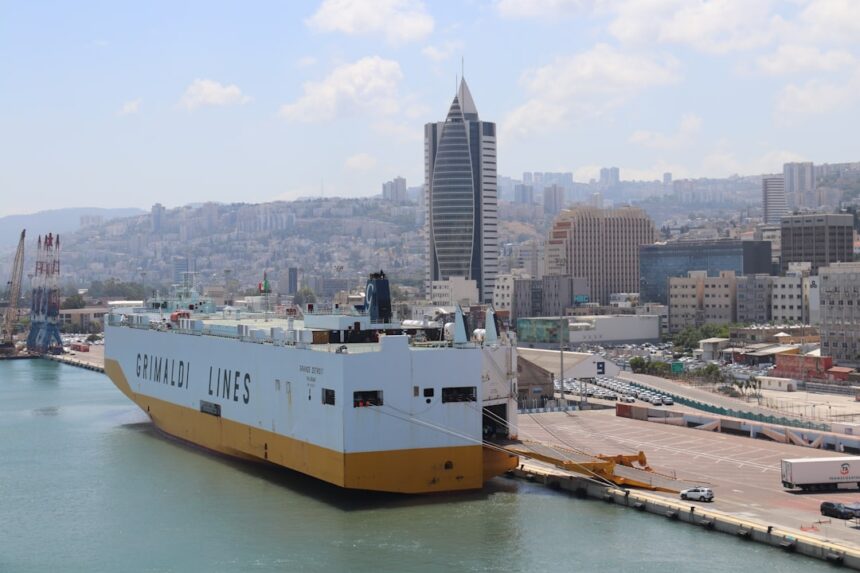
Photo by Shalev Cohen on Unsplash
This article is a curated summary based on third-party sources. Source: Read the original article