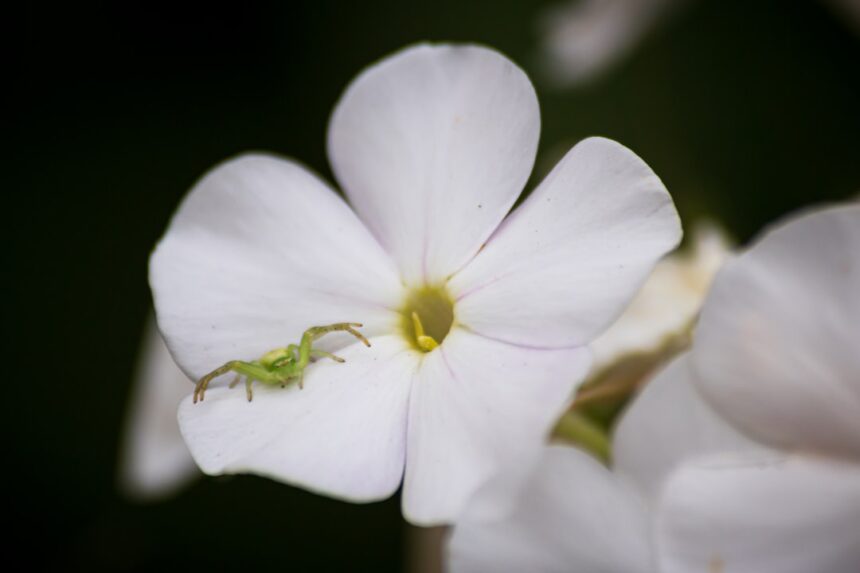
Japanese red elder plants drop fruits containing beetle larvae — and for decades, scientists assumed this was how the plant punished its pollinators. A study from Kobe University says that interpretation was incomplete.
The plant in question, Sambucus sieboldiana, depends on Heterhelus beetles for pollination. While feeding and mating on the flowers, the beetles transfer pollen. They also lay eggs inside developing fruit.
The plant’s response is to abort nearly all larvae-containing fruit. Scientists previously categorized this as a sanction — a mechanism to keep insect populations from overexploiting the plant. The larvae were assumed to die in the process.
They don’t.
According to the report, the larvae exit the dropped fruit and burrow into the soil, where they continue developing until maturity. The fruit drop limits the plant’s resource investment without eliminating the next generation of pollinators.
A Compromise, Not a Punishment
Kenji Suetsugu, the botanist who led the research, first noticed something unusual while observing the plants in the field. “I once observed Japanese red elder flowers full of Heterhelus beetles mating and feeding, and I also saw fruits infested by the beetles’ larvae dropping in large numbers,” he says. “With such seemingly great losses to both sides, I wondered whether this was really punishment.”
The team ran pollination exclusion experiments, hand pollination trials, and developmental tracking that continued after fruit drop — a methodological scope that Suzu Kawashima, the study’s first author, describes as rare. “Many studies stop at one of these steps, simply because doing all of them takes time, patience and logistical commitment.”
Kawashima frames the result as a shift in how nursery pollination mutualisms are understood. “What our finding shows is a different route to a stable balance, where fruit abortion can function as a compromise that both sides can tolerate — without denying the underlying conflict that defines nursery pollination mutualisms in the first place.”
Location Changes the Math
The researchers calculated costs and benefits across multiple sites. The balance between plant and beetle shifted depending on location, suggesting local environmental conditions shape how the relationship functions in practice.
The study is published in the journal Plants, People, Planet. The findings add a new case to a short list of nursery pollination systems — alongside figs and fig wasps, and yuccas and yucca moths — where the line between cooperation and conflict is not fixed.
The standard model assumed fruit drop ended larval development. This system shows the beetles evolved around that mechanism entirely.
Photo by Alexander Fastovets on Unsplash
This article is a curated summary based on third-party sources. Source: Read the original article