Olena Dzneladze found it first in the field reports. Or rather, she found that nobody had looked closely enough before.
The red lumps had been turning up in graves at Chervony Mayak since 2011. The burial ground, a Late Scythian site beside the Dnieper River in southern Ukraine, had been excavated since the 1970s. Across 177 graves, only three contained the mineral. No one had formally identified what it was. The study, published in 2025 in the journal Antiquity, did that for the first time: the lumps are cinnabar, a deep-red mineral form of mercury sulfide and one of the more toxic substances found in prehistoric burial contexts anywhere in Europe.
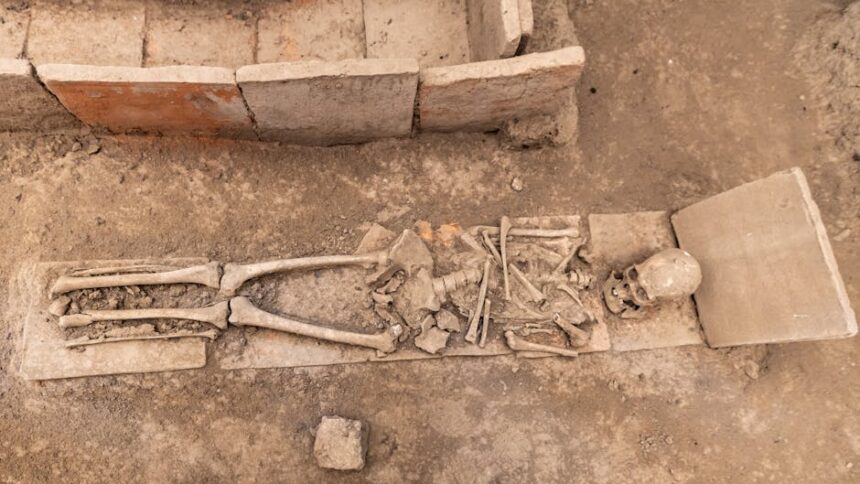
The grave at the center of the research held two women. The older, aged between 35 and 45, was buried first. Later, the same crypt was reopened to inter a younger woman, estimated to have been between 18 and 20 at death. Both were accompanied by beads, pottery and metal items. The burial dates to the first to early second century A.D., near the close of Scythian culture on the Eurasian Steppe.
A Practical Problem With a Toxic Solution
The Scythians were not unusual in reopening graves. According to Dzneladze, an archaeologist at Ukraine’s National Academy of Sciences and the study’s first author, “one crypt could function for up to 50 years in a row.” She told a science publication that excavations confirm Late Scythian crypts were routinely opened for secondary and tertiary burials.
That habit creates a problem: decomposing remains. The researchers suggest cinnabar may have served a functional role here, slowing bacterial decay and buying time between interments. Mercury compounds do resist microbial activity, which would have made cinnabar — whatever its ritual significance — useful in a practical sense.
The mineral also carried symbolic weight. Across prehistoric Europe, the deep-red pigment was applied to the dead, possibly to simulate the flush of living skin. Ocher, a nontoxic iron oxide, served a similar purpose in many cultures. Cinnabar looked the same but behaved very differently in the body. Prolonged exposure causes mercury to accumulate in bone and tissue, producing tremors, breathing difficulties and, at high enough concentrations, death. The study’s authors note the people using it in first-century Ukraine likely had no knowledge of its toxicity.

Why This Burial Stands Out
Cinnabar has appeared in prehistoric graves across Europe, but its presence in Late Scythian contexts had never been scientifically confirmed before this study. The mineral’s absence from the broader record may be partly a problem of documentation. The researchers suggest cinnabar could have gone unidentified in other Scythian graves, buried in field reports and publications that never subjected the red residue to chemical analysis.
At Chervony Mayak specifically, only three of 177 graves contained the mineral, which points to selective use rather than common practice. Whether that selection reflected the status of the dead, the preferences of the living, or something else, the source material does not say.
Photo by Boris Hamer on Pexels
This article is a curated summary based on third-party sources. Source: Read the original article