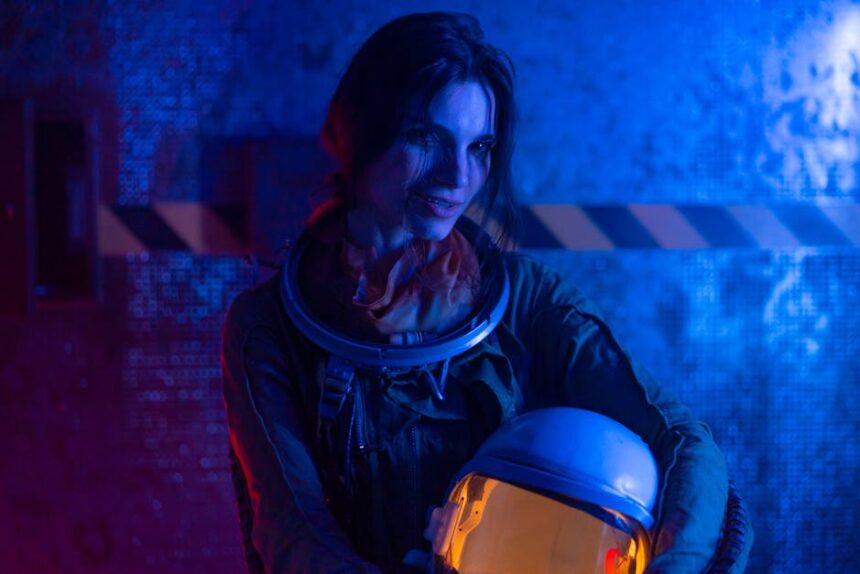
Drew Goddard says he was “so scared” adapting Project Hail Mary for the screen, calling it a far more ambitious undertaking than his previous collaboration with author Andy Weir — the 2015 film The Martian.
The film, directed by Phil Lord and Christopher Miller and starring Ryan Gosling as astronaut Ryland Grace, follows a lone scientist who wakes aboard a spacecraft with no memory, discovers his crew is dead, and eventually meets an alien named Rocky who is attempting to solve the same extinction-level threat facing his own planet. The scale, Goddard says, made the adaptation genuinely difficult. “This is a far more ambitious book than The Martian,” he said according to the report. “It’s a much bigger canvas, it’s a much more mature subject, the detailed emotional storyline that’s at the core of this is so intimate against this celestial backdrop. I wasn’t sure how we were going to do this justice.”
The Problem With First-Person Narration
Weir, who served as a producer on the film, identified one specific passage as particularly difficult to translate: the stretch before Ryland and Rocky are able to communicate. In the novel, interior monologue carries the reader through that silence. On screen, that tool disappears.
“There’s really no exposition,” Weir explained. “In the book, there’s Ryland’s inner monologue; it’s a first-person narration, so you know what he’s thinking and feeling. First-person narration is the ultimate cheat for people who want to tell, not show.” Goddard addressed the problem through flashbacks and scenes of Gosling speaking aloud to himself.
Weir added that he deliberately avoids thinking about adaptability when writing. “I try not to think about it at all,” he said.
Science Stayed In
One area that did not intimidate the creative team was the film’s scientific content. After audiences embraced the dense technical detail in The Martian, Goddard says he approached Project Hail Mary with more confidence on that front, even though the new film contains fewer science-heavy sequences than its predecessor.

“Going through the Martian experience is what gave us the confidence and the resolve to trust the audience,” Goddard said. “We did not dumb down The Martian, and I was scared when we did the first test screening. I thought the audience was not going to go with it; there was dense science in The Martian. And the lights came up and they loved the movie, and they loved it because it was smart.”
That experience shaped how the team handled the new material. “We trusted that if we find it interesting, the audience is going to find it interesting,” Goddard said.
The film arrives as a natural companion piece to The Martian — same author, same screenwriter, a similarly isolated protagonist — though its tonal range is wider, swinging between hard science and what amounts to a buddy comedy set at the edge of the galaxy. Amazon MGM Studios is behind the production.
Photo by Mikhail Nilov on Pexels
This article is a curated summary based on third-party sources. Source: Read the original article