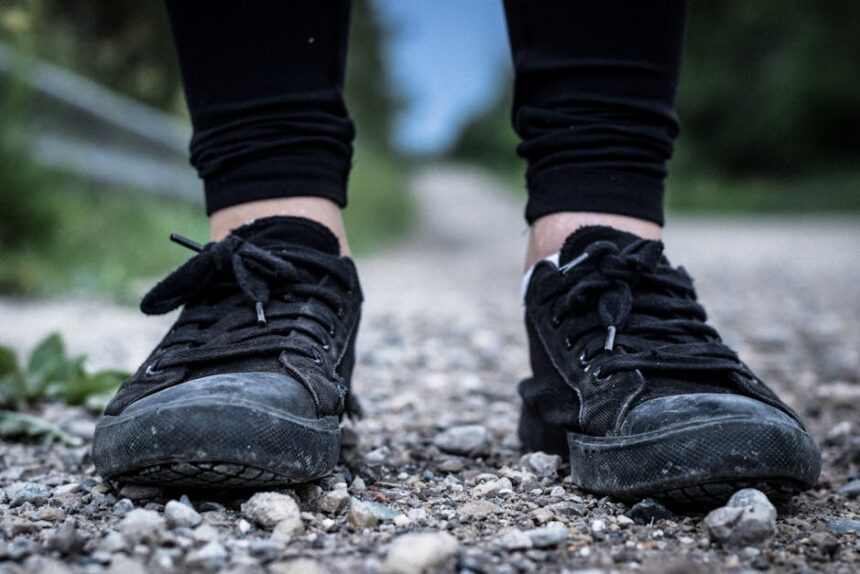
Running footwear has added another subcategory: gravel shoes, hybrid trainers built to handle mixed terrain including compacted gravel, forest roads, hard-pack trails, and standard pavement — without fully committing to either road or trail design.
The shoes blend road shoe cushioning and lighter weight with trail shoe grip and reinforced uppers, according to the report. Outsole lugs typically measure between 2 and 4 millimeters — shallower than the more than 4 mm found on technical trail shoes — with grip patterns designed to hold on uneven ground without dragging on pavement.
“Gravel is a fairly new category,” said Taylor Bodin, chief trail shoe tester for Believe in the Run. “It is meant to be versatile in the sense that it can traverse lighter terrain more efficiently. This could mean anything from a door-to-trail shoe to a light trail shoe.”
What Sets Them Apart
Most gravel shoes feature a mild rocker — a curved midsole geometry that smooths heel-to-toe transitions — and foam cushioning that sits between the maximum padding of road shoes and the firmer, protection-focused builds of technical trail footwear.
Bodin notes the road influence is dominant. “In general, we are noticing many of these shoes have more of a road running influence than they do trail,” he said. “So, there will be a mix of foams, midsole geometries, less attention to fit, and a more subtle outsole pattern compared to trail shoes.”
That road lean makes gravel shoes a poor choice for steep mountain terrain or ankle-deep mud. They are not designed to replace dedicated trail shoes for technical use. What they offer instead is confidence across a wide band of everyday mixed-surface running without needing to swap footwear.

Who Actually Needs One
The case for gravel shoes is strongest for runners who regularly transition between pavement and unpaved paths — a common pattern for urban runners accessing parks, river trails, or gravel tracks from their front door.
“Many of the shoes in this category can run well on roads, gravel paths, and light trails,” Bodin said. “That’s not something that very many strictly road shoes or dedicated trail shoes can do.”
The rockered midsole also aims to reduce calf fatigue on longer mixed-surface efforts, where constant surface changes force repeated micro-adjustments in gait. Gravel shoes tend to run lighter than technical trail options, partly because the smaller lugs and less aggressive outsole patterns trim overall weight.
For runners already owning both a road shoe and a full trail shoe, the gravel category offers limited additional value. The shoe earns its place in a quiver when a single versatile option is the priority — particularly for newer trail runners who spend the majority of time on firmer, more forgiving surfaces rather than remote or technical routes.
Current models cited in the report include the Salomon Aero Blaze 3 GRVL at $140 and the On Running Cloudsurfer Trail 2 at $170, with the latter currently discounted to $127 at select retailers.
Photo by Trinity Kubassek on Pexels
This article is a curated summary based on third-party sources. Source: Read the original article