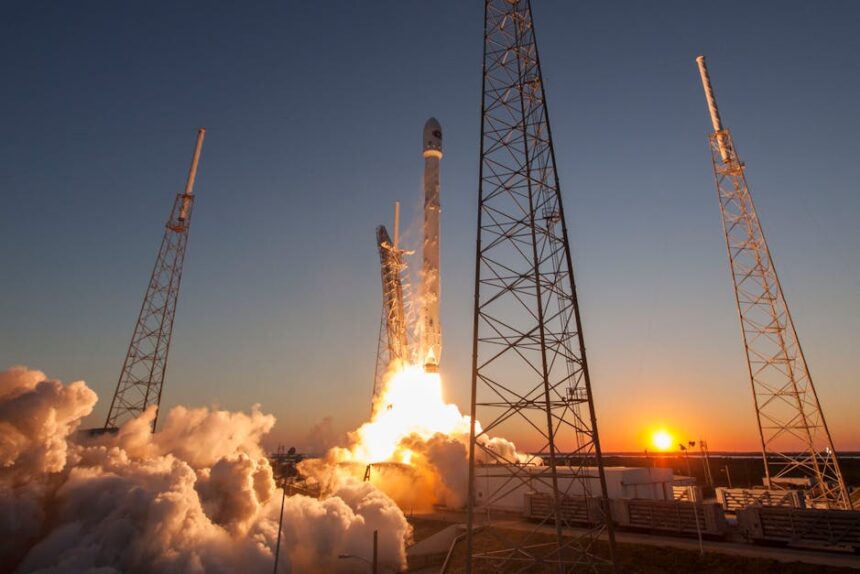
United Launch Alliance cannot deliver the US Space Force’s next GPS satellite. For the fourth time in just over a year, the military has moved a GPS launch away from the joint Boeing–Lockheed Martin venture and handed it to SpaceX.
Space Systems Command confirmed Friday that GPS III SV10 — the final satellite in the GPS Block III program — will now launch on a Falcon 9 rocket in late April.
ULA‘s Vulcan rocket is grounded for the second time in less than two years. On its second and fourth flights, in October 2024 and last month, the rocket suffered problems with its solid rocket boosters. An investigation into the first incident found a manufacturing defect caused the loss of the booster’s exhaust nozzle shortly after liftoff. Officials have not announced results from the probe into the second failure, though it appeared similar. Both times, Vulcan recovered from the problem and reached orbit — but the pattern was enough for military officials to act.
The officer in charge of the Space Force’s launch program said last month that the booster investigation will take “many months.” No Vulcan missions will fly until it concludes.
The three GPS satellites before SV10 were also originally assigned to Vulcan. Starting in 2024, the Space Force shifted all three to SpaceX’s Falcon 9. To compensate, military officials reassigned three future launches — including SV10 — from SpaceX to ULA. That rebalancing has now unraveled. SV10 is back with SpaceX, and ULA receives rights to a classified military mission in 2028.
A Rocket That Arrived Late
Vulcan’s debut was originally planned for 2020. It did not fly until early 2024. Space Systems Command had assigned GPS launch contracts years earlier, when the rocket was approaching its first test flight. The delays and subsequent booster failures have left ULA unable to execute the missions it was contracted to perform.

Each GPS III satellite weighs more than four tons at launch. Only three rockets hold Space Force certification to fly them: SpaceX’s Falcon 9, the Falcon Heavy, and Vulcan. With Vulcan sidelined, SpaceX is the only practical option.
SpaceX operates a fleet of reusable boosters flying multiple times per week, giving it the capacity to absorb missions on short notice.
From Monopoly to Backup
ULA was once the Pentagon’s sole launch provider. SpaceX broke into the national security launch market in 2018, following a 2014 lawsuit against the Air Force over a multibillion-dollar sole-source contract awarded to ULA. The Air Force opened the contracts to competition, and in 2020 both companies were selected for launch work going forward.
“With this change, we are answering the call for rapid delivery of advanced GPS capability while the Vulcan anomaly investigation continues,” said Col. Ryan Hiserote, director of the National Security Space Launch program.
ULA has not announced a timeline for returning Vulcan to flight.
This article is a curated summary based on third-party sources. Source: Read the original article