A new analysis of moon rocks collected during NASA’s Apollo missions has resolved a long-standing debate about the lunar magnetic field, suggesting the moon was magnetically weak for most of its history but experienced brief, intense surges early in its formation.
The research, published in Nature Geoscience, found that those surges lasted no longer than 5,000 years — and possibly as little as a few decades — occurring roughly 3.5 to 4 billion years ago, during a narrow window of the moon’s 4.5-billion-year existence.
What the rocks revealed
The key finding came from mapping titanium content in Apollo lunar samples against their magnetic strength. Rocks containing less than 6% titanium showed weak magnetic signatures. Rocks with higher titanium concentrations were more strongly magnetized. The pattern held consistently across the sample set.
Claire Nichols, an associate professor of the geology of planetary processes at the University of Oxford and lead author of the study, explained the mechanism: “For very short periods of time — no more than 5,000 years, but possibly as short as a few decades — melting of titanium-rich rocks at the moon’s core-mantle boundary resulted in the generation of a very strong field.”
In other words, both the high-titanium rocks and the strong magnetic episodes appear to share a common cause: the temporary melting of titanium-rich material deep inside the moon.
Why the debate lasted this long
The confusion traces back to a sampling problem. All six Apollo missions, which landed between 1969 and 1972, touched down near the lunar equator — on large, flat volcanic plains called maria. These plains, formed by ancient meteorite impacts that melted the original surface rock, happen to be rich in titanium basalts.

Because so many analyzed samples came from titanium-rich zones, scientists developed an inaccurate picture: that strong lunar magnetism was widespread and long-lasting. The sample wasn’t representative. It was geographically and geologically narrow.
Other researchers had already been skeptical. The moon’s core is unusually small — just one-seventh of its total radius — and many scientists argued that such a small core could not sustain a strong magnetic field over long timescales. The new findings validate that skepticism.
The Apollo archive and its limits
Apollo samples still dominate Earth’s lunar inventory. NASA holds roughly 842 pounds (382 kilograms) of moon rocks from those missions. The rest of Earth’s lunar material — around 1,433 pounds (650 kilograms) total — comes primarily from meteorites.
That archive has been invaluable. It has also, in this case, quietly skewed scientific thinking for decades by over-representing one type of terrain.
The new study doesn’t discard the Apollo data. It recontextualizes it — showing that what looked like evidence of a persistently strong magnetic field was actually a record of rare, geologically brief spikes tied to specific rock chemistry. The moon’s magnetic story turns out to be mostly quiet, punctuated by short bursts of intensity that left a disproportionate mark on the rock record scientists have been studying ever since.
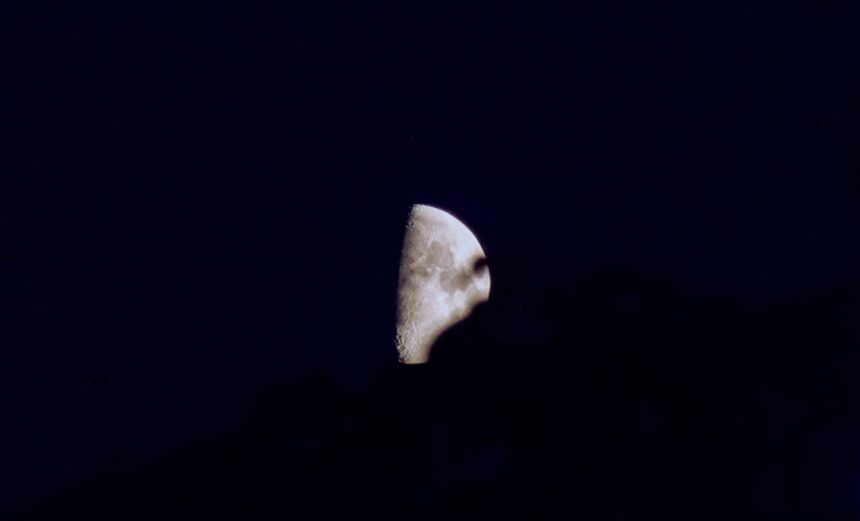
Photo by Darya Karaliova on Unsplash
This article is a curated summary based on third-party sources. Source: Read the original article