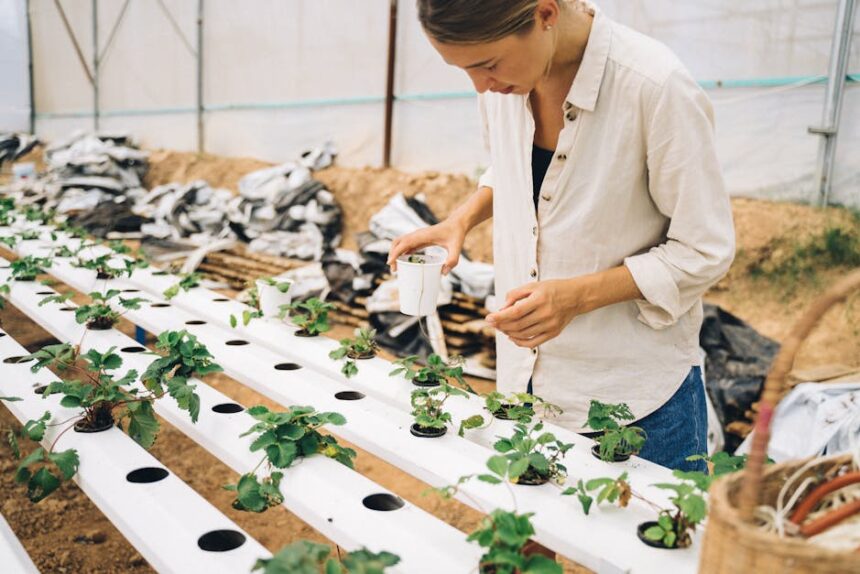
One cauliflower. That’s what stopped the testing notes cold — a full cauliflower, grown inside a pipe, under artificial light, in someone’s living room.
After more than a year of hands-on testing across every major indoor hydroponic brand, the results are in. The writer behind this evaluation spent decades gardening, studied forestry with a focus on dendrology and watershed management, and has grown something — anything — in every apartment and living situation along the way. That history shapes what follows: not marketing copy, but a year of direct observation.
The Standout System
The Gardyn Home 4.0 costs $899 and produced the most consistent results of anything tested. Flowers, kohlrabi, thyme, and that cauliflower all came up in its pipe-based structure, which positions lights at the front to accommodate taller growth. Seeds arrive in proprietary pods called yCubes, and the system’s assembly ranked among the easiest out of the box.
What makes it work — almost without any effort — is an optional subscription app called Kelby. Sensors and cameras monitor the plants continuously. The app delivers customized watering schedules, lighting adjustments, and maintenance suggestions generated by AI, which, according to an anonymous source cited in the report, is essentially OpenAI‘s ChatGPT running on an overlaid prompt. That subscription adds $408 per year on top of the base price, though it includes monthly credits toward new yCubes, with the amount varying by model. A free 30-day trial is available, and the system can run without Kelby entirely through manual controls — though recent privacy concerns around the app are noted.
Each purchase includes a choice of yCube sets: “Salad Lover,” “Budding Florist,” or “Chef Faves.” The tester favored “Chef Faves,” which includes breen, Tokyo bekana greens, Thai basil, and miniature sunflowers. The company sells an $80 add-on nursery for germination, but the report says yCubes sprouted fine directly in the system — with one important note: nutrients should not be added until after sprouting.
The Rest of the Field
The Lettuce Grow Farmstand (indoor, medium) runs $973 and was described as a statement piece alongside its practical function. For beginners, the AeroGarden Bounty is available for $144 on Amazon — down from its standard $163, a 12 percent discount. At the lower end of the range, the LetPot LPH-SE Senior Hydroponic Growing System lists at $120 and serves as the best budget option among those tested.

For those who want something smaller and low-maintenance, the Auk Mini at $239 is described as an attractive option built for herbs and little else.
The guide was last updated in March 2026, with newly added FAQ sections covering real-life yields, placement considerations, and ongoing ownership costs. A microgreens planter from Vego was added as an honorable mention. Long-term testing notes were also amended throughout.
These systems are investments — in upfront cost, in subscription fees, in attention. The Gardyn Home 4.0 alone, with a full year of Kelby, runs over $1,300 before a single yCube is purchased beyond the included set. What the tester grew in that time, including a whole cauliflower in a pipe, is one way to weigh that number.
Photo by Anna Tarazevich on Pexels
This article is a curated summary based on third-party sources. Source: Read the original article