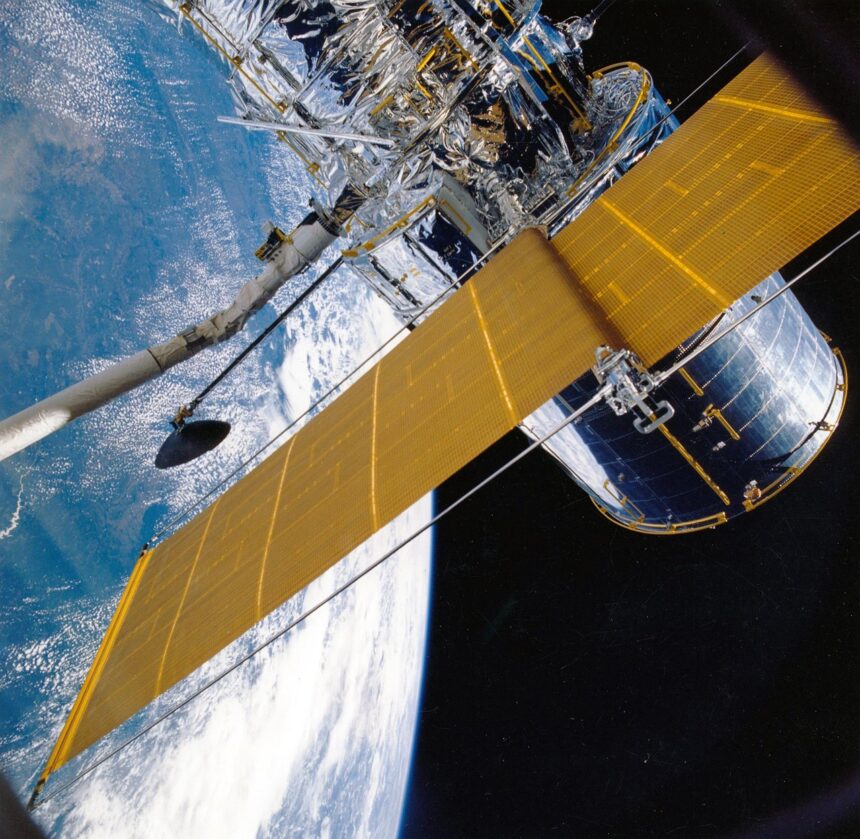
Fifty thousand satellites. That’s the scale Blue Origin has asked the Federal Communications Commission to approve — not for communications, but for computation.
In a filing dated March 19, the company’s attorneys described “Project Sunrise” as a network of spacecraft designed to perform advanced processing in orbit, according to the document. The stated goal: shift energy-intensive and water-intensive compute away from ground-based data centers, easing pressure on communities and natural resources below.
The filing offers little technical detail about how much computing power the company intends to generate.
What it does describe is the communications layer. Blue Origin plans to use a separate satellite constellation it is also seeking to build, called TeraWave, as a high-throughput backbone connecting the data satellites to each other and to the ground. That layered architecture — one network serving another — suggests the company is thinking about this as infrastructure at planetary scale, even if the specifics remain vague in the regulatory record.
The appeal of doing this in space is straightforward: solar energy costs nothing to harvest once you’re in orbit, and corporate activities face fewer regulatory constraints beyond Earth’s atmosphere. Entrepreneurs pursuing these projects expect AI inference workloads to grow substantially and believe orbit is where much of that computation will eventually run.
Blue Origin is not first. SpaceX has already filed with the FCC for permission to launch a million satellites configured as a distributed data center. The startup Starcloud has proposed a network of 60,000 spacecraft. Google is developing a concept called Project Suncatcher, with partner Planet Labs set to launch two demonstration spacecraft next year.

But the economics are unresolved across all of them. Cooling processors in space, building laser communication links between satellites, and manufacturing chips hardened against high-radiation environments — all at costs low enough to justify the endeavor — remain active engineering problems. The single biggest variable is launch cost. Most of these projects are underwritten by the assumption that SpaceX‘s Starship rocket, still under development and potentially flying its first 2026 mission as early as next month, will drive the price of reaching orbit sharply lower.
This is where Blue Origin sees an opening. Its New Glenn rocket, which completed its first flight last year, ranks among the most powerful operational launch vehicles currently flying. If the company can establish a regular cadence of flights and begin reusing the vehicle at scale, it could gain the same vertical integration advantages that allowed SpaceX to build dominance in satellite communications through its Starlink network.
The obstacles extend beyond economics. Orbits close to Earth are growing more congested, and adding tens of thousands of additional satellites intensifies collision risk. Retiring obsolete satellites by burning them up in the atmosphere — current standard practice — releases metallic particles that researchers believe may affect upper atmospheric chemistry and damage the ozone layer.
Experts say projects at this scale are unlikely to become operational before the 2030s. The March 19 filing included no timeline.
Photo by Pixabay
This article is a curated summary based on third-party sources. Source: Read the original article