Genetic sequencing has quietly reshaped how biologists define species boundaries, revealing that visible similarity often masks significant genomic divergence. New research on a group of Southeast Asian frogs illustrates both the power and the limits of that approach.
A study published in the journal Systematic Biology examined the Bornean fanged frogs — named for tooth-like projections along their jaws — a group of small brown amphibians long catalogued under a single species, Limnonectes kuhlii, since 1838. Over the past two decades, genetic research had suggested that what looked like one species might actually represent as many as 18 distinct ones. The new findings, according to the announcement from Michigan State University, tell a more complicated story.
Chan Kin Onn, a herpetologist and Curator of Vertebrate Collections at MSU and core faculty member in its Ecology, Evolution and Behavior program, led a team that collected DNA from specimens across the mountainous rainforests of Malaysian Borneo. The researchers analyzed more than 13,000 genes across the frogs’ genomes. The data did separate the frogs into several genetic clusters — but the evidence supports roughly six or seven distinct species, not 18. “It’s not just one species. But it’s not 18 species, either,” Chan said.
The frogs were never found in a new jungle clearing. They were identified, as Chan describes the modern reality of field biology, in a test tube. “Most people have this image of an intrepid explorer braving an isolated mountain or some other remote place, and stumbling across a creature that no one has ever seen before,” he said. “But most of the time it’s far less glamorous.” Animals that look alike but carry distinct genetic signatures are known as cryptic species, and advances in sequencing have made locating them far more routine — Chan noted that “a ton of cryptic species are being discovered left and right.”
Why the Species Count Has Conservation Consequences
The question of how many species exist within a genus is not purely taxonomic. It carries direct implications for which populations receive legal and institutional protection. Amphibians are already the most endangered group of vertebrates: a 2023 analysis of roughly 8,000 amphibian species found that two out of five face extinction threats. Chan contributed to that analysis and has emphasized that unrecognized species cannot be protected.
“There are so many species in the world that we still haven’t discovered, and that could go extinct before we can give them a name,” he said.

The Risk of Over-Splitting
The research also highlights a less-discussed hazard in the opposite direction. Splitting one species into many smaller units too quickly can reduce the perceived population size of each newly defined group, potentially misrepresenting their actual vulnerability or diluting conservation resources across a larger number of categories. Chan acknowledged the tension directly: “But there’s a flip side to that coin too.”
Worldwide, scientists have identified more than 9,000 amphibian species, with roughly 100 to 200 new ones formally described each year. The Bornean fanged frog study suggests that the tools now available to researchers are precise enough to avoid both under-counting and over-splitting — but that the boundaries between species can remain genuinely blurry even after exhaustive genomic work.
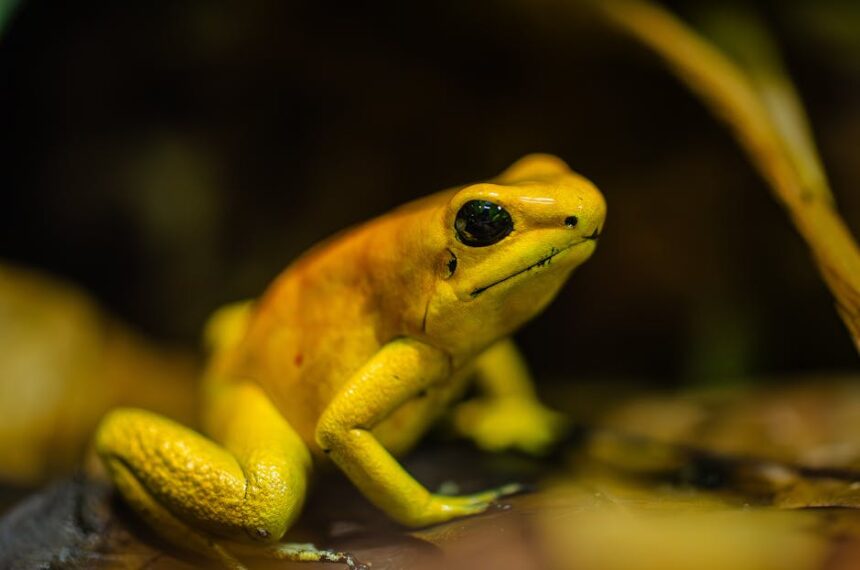
Photo by Leon Aschemann on Pexels
This article is a curated summary based on third-party sources. Source: Read the original article