Water managers have long assumed that drought reduces plant water use, leaving river flows broadly intact. A new study dismantles that assumption — with direct consequences for how the Colorado River basin is understood and managed.
Research conducted by Reed Maxwell and Harry Stone, environmental engineers at Princeton University’s High Meadows Environmental Institute, finds that plants bordering the Colorado River watershed do not reduce their water consumption during hot, dry summers. Instead, they shift their source, drawing from shallow groundwater reserves rather than surface soil moisture. That groundwater would otherwise contribute to river flow, meaning drought conditions suppress streamflow through a mechanism that had not been fully quantified until now.
The team installed a sensor array across a 200-acre (81-hectare) section of the East River watershed in Colorado — a tributary that feeds into the Colorado River — and tracked water movement through two contrasting years: 2023, which produced high snowpack but a hot, dry summer, and 2024, which had moderate snowpack followed by a cool, wet summer. Evapotranspiration, the combined loss of water through soil evaporation and plant transpiration, remained high across both years even when soil moisture hit record lows.
“Dry summer, wet summer; they’re getting their water,” Maxwell told the report’s source. “But they’re finding it from other sources. They’re taking it from shallow groundwater.”
This behavior has been labeled the “drought paradox” in recent scientific literature: plants maintain or even increase transpiration during dry periods rather than dialing it back, as earlier models assumed. What the Princeton study adds is a direct measurement of where that water comes from and where it would have gone otherwise. The implication is that hot summers function as an independent tax on river flow, separate from and compounding the effect of low snowpack. Historical streamflow data reviewed by the researchers confirms that summer temperatures affected the Colorado River‘s streamflow regardless of winter snowfall levels. Snowmelt efficiency — how much runoff a given volume of snowmelt actually produces — has declined over the past century, meaning the same storm delivers progressively less water to reservoirs over time. Climate change is identified as a contributing factor, though the researchers note the full picture remains unsettled.
“We see that across the Upper Colorado River Basin; a warm summer will actually take a big snowmelt and make it like an average snowmelt because of the additional water demands from plants,” Maxwell said.

The stakes are not abstract. According to the study, more than 10% of the US population draws the majority of its water from the Colorado River, and globally more than 1.4 billion people rely on snowmelt-driven mountain rivers. The findings carry direct implications for water management across Arizona, California, and other states that depend on the basin — particularly as planning models built on snowpack projections alone may be systematically overestimating future supply.
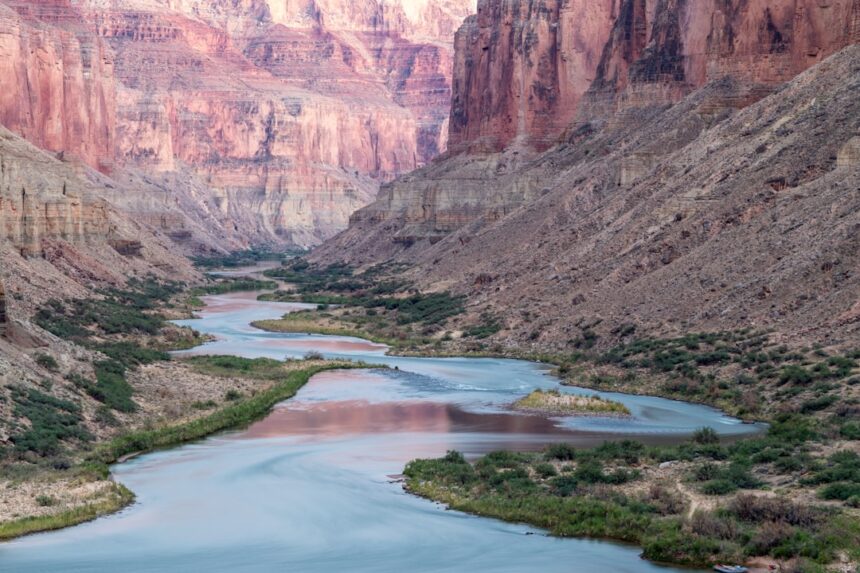
Photo by Steve Gribble on Unsplash
This article is a curated summary based on third-party sources. Source: Read the original article