Federal surveillance law has long contained a gap between what courts require the government to do when obtaining data directly from carriers and what agencies can do when purchasing the same data from commercial brokers. The FBI has now confirmed it is exploiting that gap again.
At a Senate Select Committee on Intelligence hearing, FBI Director Kash Patel acknowledged that the bureau is purchasing commercially available location data on Americans without a warrant. Asked directly by Sen. Ron Wyden (D-Ore.) whether he could commit to stopping the practice, Patel declined. “The FBI uses all tools to do our mission,” he said, adding that the purchases are “consistent with the Constitution and the laws under the Electronic Communications Privacy Act” and “has led to some valuable intelligence for us.”
That confirmation reverses a position the agency held publicly for roughly two years. In March 2023, then-FBI Director Christopher Wray told Congress that a prior location data purchasing program — described as a national security pilot project — had not been active “for some time” and that the agency was not currently buying commercial database information containing location data derived from internet advertising.
Wyden interpreted Patel’s answer as an admission that the bureau has resumed purchases, calling it “an outrageous end-run around the 4th Amendment” and flagging the added risk posed by artificial intelligence tools capable of processing large volumes of private data. He cited the exchange as justification for passing the Government Surveillance Reform Act, a bipartisan bill he introduced alongside Sen. Mike Lee (R-Utah) that would generally bar the federal government from purchasing location data on people in the US without a warrant or a Foreign Intelligence Surveillance Act (FISA) order. The bill would also cover communications content, web browsing history, and internet search history.
Sen. Tom Cotton (R-Ark.), chairman of the Senate Intelligence Committee, defended the purchases by drawing an analogy to established law enforcement practice. “If any other person can buy it and the FBI can buy it and it helps them locate a depraved child molester or savage cartel leader, I certainly hope the FBI is doing anything they can to keep Americans safe,” he said, comparing commercially available data to trash left at the curb, which courts have ruled carries no reasonable expectation of privacy.
The legal foundation Cotton references is real but contested in this context. The Supreme Court ruled in 2018 that the government requires a warrant to obtain cell-site location information from wireless carriers directly. That ruling, however, did not address purchases from third-party data brokers, who typically acquire location data from app developers. Major wireless carriers have separately faced Federal Communications Commission enforcement action over selling customer location data to aggregators, allegedly without user consent, and are contesting those penalties.

The hearing also unfolded against the backdrop of an approaching legislative deadline. FISA’s Section 702 is set to expire on April 19, 2026, and Cotton stated his support for a clean reauthorization as requested by President Trump. Wyden and allied legislators are pressing for a version that scales back surveillance authority — a dispute the location data exchange made more pointed.
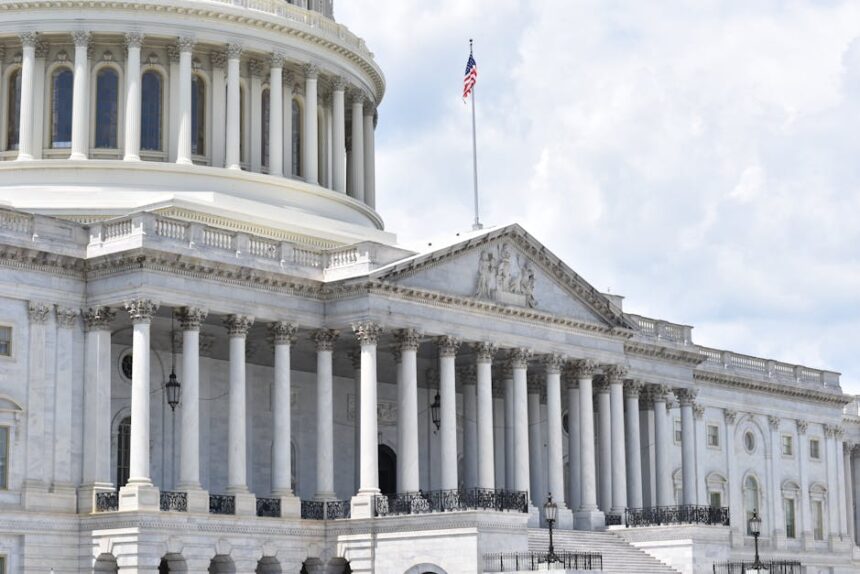
Photo by Gagan Kaur on Pexels
This article is a curated summary based on third-party sources. Source: Read the original article