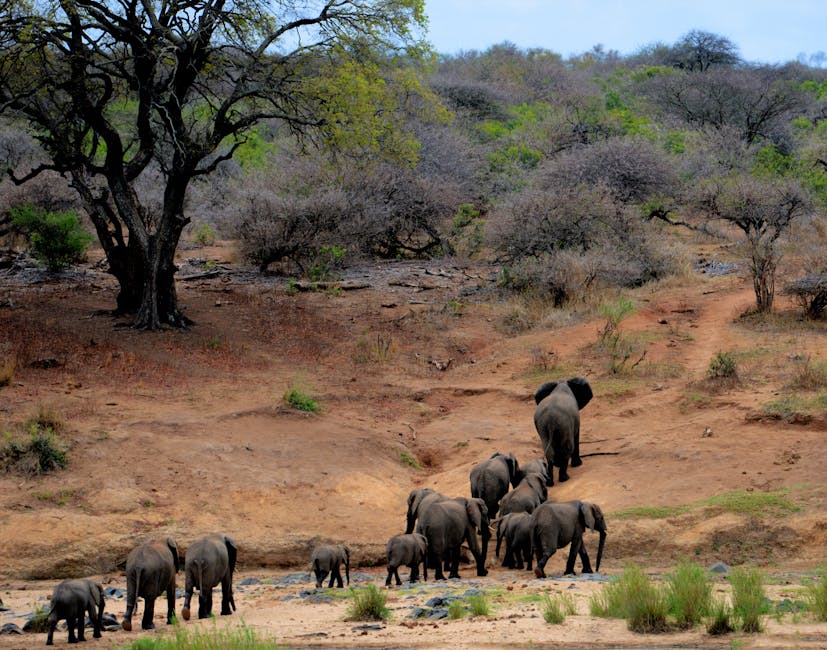
Werner Herzog has never been interested in straightforward documentary subjects, and Ghost Elephants fits his body of work precisely: a scientific quest set against vast, remote wilderness, filtered through questions of myth, obsession, and what it means to search for something that may not exist.
The film follows Steve Boyes, a conservationist and ornithologist, as he pursues a rumored new species of elephant deep in the Angolan Highlands. According to the announcement, the documentary debuted at the Venice International Film Festival and is now coming to National Geographic and Disney+. Herzog, who also narrates, has described the project as arriving at him “with urgency,” likening it to “the hunt for Moby Dick, the White Whale” and framing it as “an exploration of dreams, of imagination — weighed against reality.”
An Ornithologist Among Elephants
Boyes’ pursuit of elephants is less a departure from his scientific work than an extension of it. His PhD research on the Meyer’s parrot in the Okavango Delta — home to what he describes as the single largest elephant population in the world — placed him in constant proximity to the animals. The relationship was functionally symbiotic: every tree the parrots fed on, elephants were feeding on too, and the elephants’ disturbance of trees created nest cavities the parrots depended upon.
His connection to elephants is also personal. Boyes grew up in South Africa, where his parents regularly took him and his brother into the bush, including trips to Botswana and Tanzania. While his brother feared elephants, Boyes was walking alongside them from an early age. He describes how elephants, under the right conditions, “will come and swim around you and with you and interact with you” — behavior the film captures in underwater footage of the animals swimming on their sides and moving through water.
The two men met at a Beverly Hills restaurant through a mutual friend and spent hours in conversation covering, as Boyes recounted, “the meaning of life, where thoughts come from, personal experiences of loneliness, and the ghost elephants.” That exchange produced the film.
History, Ritual, and the Weight of the Hunt
The documentary extends well beyond the mechanics of a wildlife search. When Herzog joined Boyes in Namibia, he documented the region’s culture and mythology alongside the scientific mission. The film includes footage of a ritual elephant dance in which a tribal elder enters a trance to allow the spirit of an elephant to inhabit his body.

The report also notes a thread running through the film connecting present and past: Boyes visits the Smithsonian Museum, where he stands before the mounted specimen of the largest elephant ever killed — shot in Angola on November 13, 1955, by Josef J. Fenykovi and later donated to the institution, where it became known as “Henry.” Boyes and Dr. Melissa Hawkins also examine Henry’s actual tusks, held in storage at the Smithsonian.
For Boyes, the entire arc traces back to a childhood spent waiting for National Geographic maps to arrive in the post. “Those would become my garden, or the field beyond, or the river — wild places imagined and real,” he said. The ghost elephants of the Angolan Highlands sit at the intersection of exactly that: the imagined and the real.
Photo by Frans van Heerden on Pexels
This article is a curated summary based on third-party sources. Source: Read the original article