Google has publicly outlined the requirements for two fee-reducing developer programs, Apps Experience and Games Level Up, which allow qualifying developers to pay reduced service fees in exchange for expanding their apps and games beyond smartphones to additional device categories.
The programs emerge from a binding term sheet filed in the Epic v. Google antitrust case. Google is restructuring its Play Store fees starting in July: a standard 20 percent charge on in-app purchases, down from the previous 30 percent, and 10 percent on subscriptions. Developers who qualify for these additional programs can save up to 5 percent more.
What the Games Level Up Program Requires
The Games Level Up Program sets a clear schedule. Starting in 2026, game developers must publish titles on mobile and large-screen devices, including tablets, Android PCs, and the Play Games on PC platform, all at what Google terms “exemplary quality.” By 2027, the requirement expands to XR headsets, Android TV, and Android Auto.
Google does build in exceptions. Developers are not penalized if a specific form factor would meaningfully degrade the experience, such as a GPS-based game on a TV, or if technical constraints like memory, performance limits, or operating system version make a quality port impossible.
The quality bar has several components. Games must meet stability thresholds covering frame rate consistency, crash rates, and memory usage. They must also match texture and model quality appropriate for each device, support keyboard, mouse, and controller inputs, and maintain the latest Android platform SDK standards, including 16KB page alignment and Vulkan graphics support.
New titles face a specific timing rule. They must launch on all required form factors no later than their release on comparable non-Android platforms. Miss that window, and the title becomes ineligible for program benefits until six months after it meets all requirements across every form factor.

Integration With Google Services
Beyond multi-device publishing, the program requires developers to weave in several Google Play Games Services (PGS) features. Games with user accounts must integrate PGS sign-in for social interoperability. Titles with saved-game functionality must support cloud saving, though any cloud provider qualifies. Games featuring achievements or statistics must connect to PGS achievements and Game Stats APIs, which power social features like leagues and quests.
Google also asks that participating games support its Gamer Platform by offering rewards from item classes already available in the title, such as purchasable cosmetic items.
A Clear Incentive Structure
The reduced fee applies on a per-form-factor basis. When a qualifying game publishes on one of the additional platforms, the lower service fee rate applies specifically to transactions on that platform, not across the board.
Google spokesperson Dan Jackson confirmed that more detailed program information is forthcoming. The company’s core motivation is visible in the structure itself: the programs are designed to push developers toward building for tablets, XR headsets, Android TVs, Android Auto, and Android PCs, platforms where Google’s app ecosystem has historically been thinner than on phones.
Distribution across all form factors is not mandatory. Google’s court filing states plainly that “Distribution on Play on all form factors will not be required,” giving developers the flexibility to pick and choose which additional platforms make sense for their products.
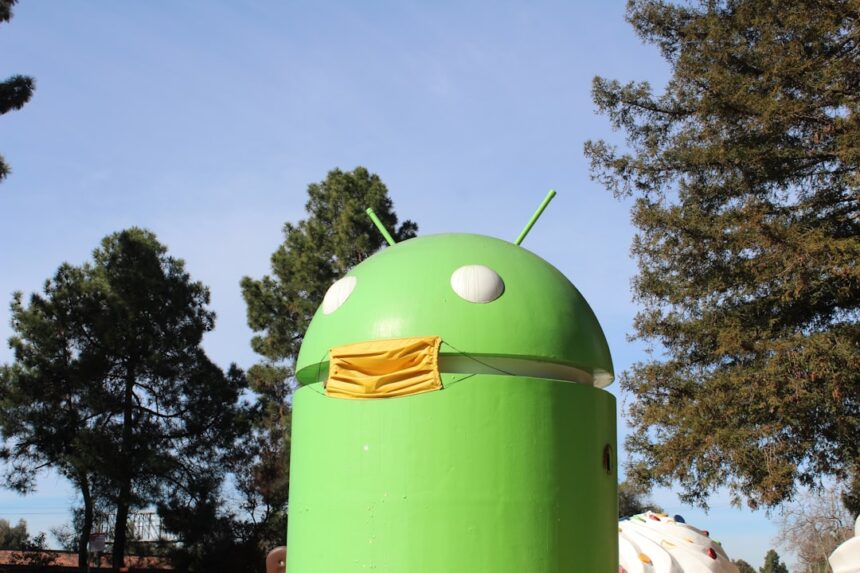
Photo by Luis Andrés Villalón Vega on Unsplash
This article is a curated summary based on third-party sources. Source: Read the original article