Horses produce their distinctive whinny by generating two entirely different sounds at once inside the larynx, a feat no other large mammal is known to perform. New research published in Current Biology has identified the precise mechanism behind this vocal phenomenon, resolving a question that scientists had not been able to answer despite centuries of close contact with the animal.
Two Sounds, One Larynx
The whinny has long been known to contain two distinct frequency components: a low-frequency element around 200 hertz and a high-frequency element above 1,000 hertz. This property is called biphonation. The low-frequency sound was straightforward to explain, produced by vibrations in the horse’s laryngeal vocal folds, the same basic mechanism behind human speech and a cow’s moo.
The high-frequency component was the puzzle. For an animal as large as a horse, producing a whistle-like sound is physiologically unexpected. Tecumseh Fitch at the University of Vienna led the team that finally worked out how it happens.
“Although humans have been co-existing and co-evolving with horses for 4,000 years, we still understand their communication imperfectly,” Fitch said.
Lab Tests on Larynges
The research team obtained horse larynges from a meat supplier and conducted a series of experiments, blowing air through the tissue to observe what sounds it could produce. Initially, only the low-frequency component appeared. With further adjustment, the team also elicited the high-frequency sound, confirming that both originate from the larynx itself rather than from the lips or nasal passage.
To determine whether the high-frequency element was a whistle or simply another form of tissue vibration, the researchers alternated between blowing air and helium through the larynges. The density difference between the two gases is a standard test for distinguishing whistle acoustics from vocal fold vibration. The low-frequency component held steady regardless of which gas was used. The high-frequency component shifted noticeably higher in helium, exactly what whistle physics predicts.

“The high-frequency component does significantly shift to be higher in helium, just as predicted for whistles,” said Fitch.
What Happens Inside a Whinny
Endoscopic observation of live horses filled in the anatomical picture. At the start of a whinny, muscles surrounding the larynx contract, narrowing the glottis and tilting the vocal folds. This increases resistance in the airway and forces a high-speed jet of air through a slit-like opening, generating the whistle.
Mice and rats can produce laryngeal whistles too, but at ultrasonic frequencies humans cannot detect. The horse is in different territory entirely.
“Horses are the only mammal known to use the larynx to produce two frequencies simultaneously where one is a whistle and, in fact, they’re the only large mammal, besides humans, to produce whistles as part of the standard vocal repertoire,” Fitch said.
Ben Jancovich at the University of New South Wales in Sydney called the findings “the first strong, experimental evidence of an aerodynamic laryngeal whistle production in any animal outside the rodent family.”
The researchers speculate the whistle may make the whinny more audible at distance and more noticeable to other horses, though those hypotheses remain untested. The mechanics, at least, are no longer a mystery.
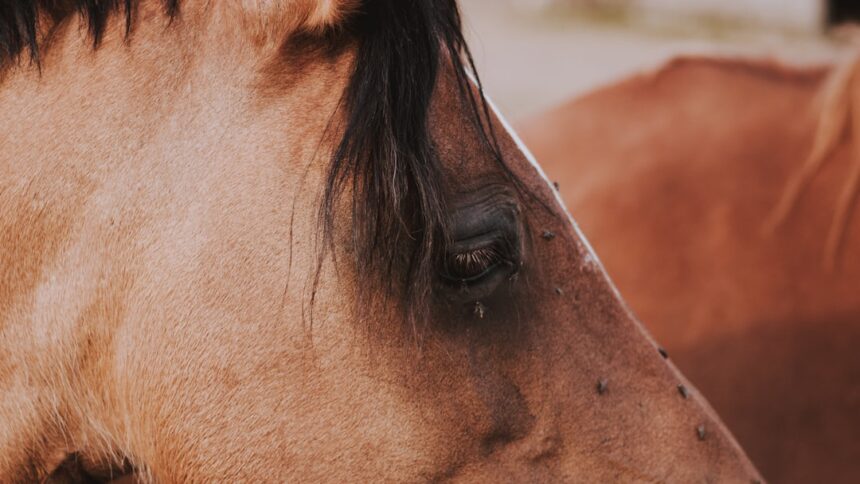
Photo by Mathias Reding on Unsplash
This article is a curated summary based on third-party sources. Source: Read the original article