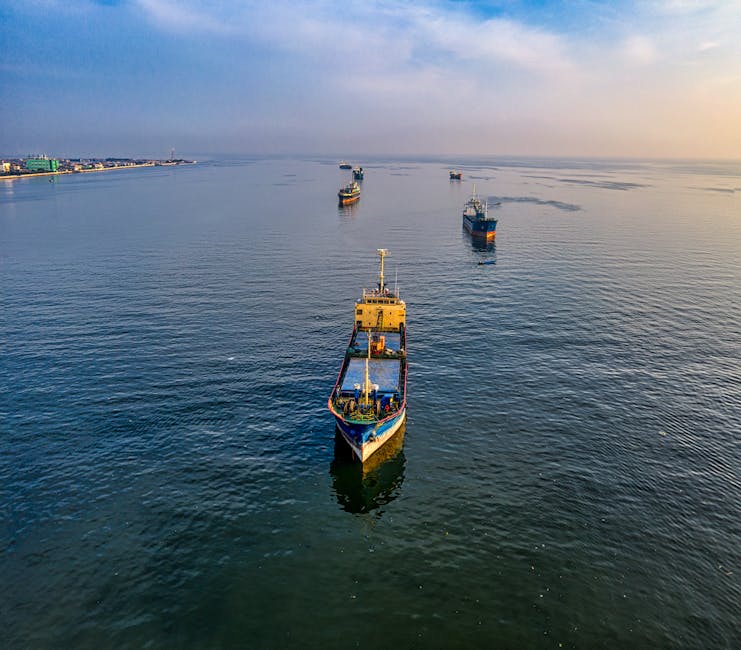
Global markets are already pricing in the risk to oil flows from renewed conflict involving Iran — but a separate, slower-moving supply crisis is taking shape that reaches directly into the world’s food supply.
According to the report, Tehran is moving to restrict, or effectively close, the Strait of Hormuz to shipping as part of the latest escalation in the war. The immediate market reaction has centered on crude oil prices and the inflationary pressure that follows energy disruption. That concern captures only part of what a sustained closure would mean.
Around a third of globally traded urea passes through the strait.
Urea is the world’s most widely used nitrogen fertilizer, and it is produced through a process that begins with natural gas. When chemists Fritz Haber and Carl Bosch developed their nitrogen fixation method in the early 20th century, they set in motion a chemical system that now underpins the food supply of the entire global population. Methane is transformed into ammonia; ammonia becomes urea; urea goes into the soil and drives the crop yields on which billions of people depend. Without it, harvests of wheat, maize, and rice would fall dramatically.
The Persian Gulf sits at the center of this system for two structural reasons: access to some of the world’s cheapest natural gas, and decades of capital investment in ammonia and urea production capacity across Qatar, Saudi Arabia, and the United Arab Emirates, all oriented toward export markets. A significant share of globally traded nitrogen fertilizer — along with the liquefied natural gas that powers fertilizer plants elsewhere — must travel through the strait to reach those markets.
A closure would immediately delay or halt shipments of ammonia, urea, and LNG. Freight and insurance costs could make remaining supplies prohibitively expensive even before physical shortages develop.

The deeper damage would arrive later, at the farm level. In the northern hemisphere, fertilizer purchases accelerate ahead of planting seasons. A delay of weeks is disruptive. A disruption running into months changes what farmers plant, how much they apply, and ultimately what comes out of the ground. Because of how crops respond to nitrogen, even modest reductions in application rates produce disproportionately large declines in yield — meaning the loss, measured in millions of tons of crops, can far exceed what the input shortage alone would suggest. Those losses then move through feed and food supply chains worldwide.
The direct consequence stated in the report is that global food security faces material risk if the disruption to Hormuz shipping persists long enough to interfere with fertilizer deliveries ahead of the next planting cycle.
This article is a curated summary based on third-party sources. Source: Read the original article