The James Webb Space Telescope has produced a detailed new image of spiral galaxy NGC 5134, capturing glowing dust clouds, newborn stars, and the full cycle of stellar formation and death in a single frame.
NGC 5134 sits approximately 65 million light-years from Earth in the constellation Virgo. That distance is large by everyday standards, but close enough in cosmic terms for JWST to resolve fine structural detail within the galaxy’s tightly wound spiral arms.
Two instruments, one image
The image combines data from two of JWST’s onboard instruments. The Mid-Infrared Instrument (MIRI) detected warm dust, rendering it as strands and clumps of glowing gas distributed across the galaxy. The Near Infrared Camera (NIRCam) captured shorter-wavelength infrared light, pulling out the stars and star clusters buried deep within those arms.
Together, the two data sets produce a view that no single instrument could achieve alone, layering the thermal signature of dust over the precise locations of stellar populations.
What the dust reveals
The glowing dust visible throughout NGC 5134 is the raw material from which stars form. Gravity draws this gas inward until nuclear fusion ignites, producing new stars that gradually consume the galaxy’s available fuel.
The cycle does not simply end there. When massive stars exhaust that fuel, they detonate as supernovas, scattering heavy elements across hundreds of light-years. Smaller stars, including those like the Sun, shed their outer layers as they expand into red giants, returning material to the interstellar medium in a slower, quieter process.

By observing galaxies like NGC 5134 in infrared light, astronomers can trace each phase of this cycle. Infrared wavelengths penetrate the dust that blocks visible light, giving researchers a clearer line of sight into the dense regions where star formation is actively occurring.
Why NGC 5134 matters for research
Spiral galaxies are among the most studied structures in the universe, but the level of detail JWST can extract at 65 million light-years represents a meaningful step beyond what earlier observatories could achieve at comparable distances.
Understanding how galaxies regulate star formation over billions of years depends on this kind of resolved, multi-wavelength data. Each image like this one contributes to a larger picture of how galaxies grow, consume their fuel, and evolve across cosmic time.
NGC 5134 is classified as a standard spiral galaxy, defined by a bright central core surrounded by arms filled with stars, gas, and dust. Those arms function as extended regions of active star formation, making them the primary focus of studies into stellar life cycles.
The image was released under credit to ESA/Webb, NASA, CSA, and researcher A. Leroy.
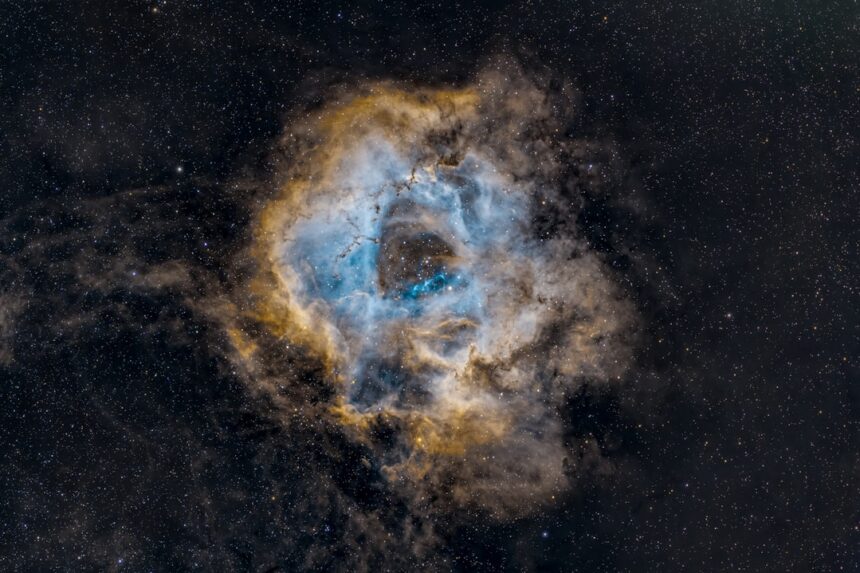
Photo by arnaud girault on Unsplash
This article is a curated summary based on third-party sources. Source: Read the original article