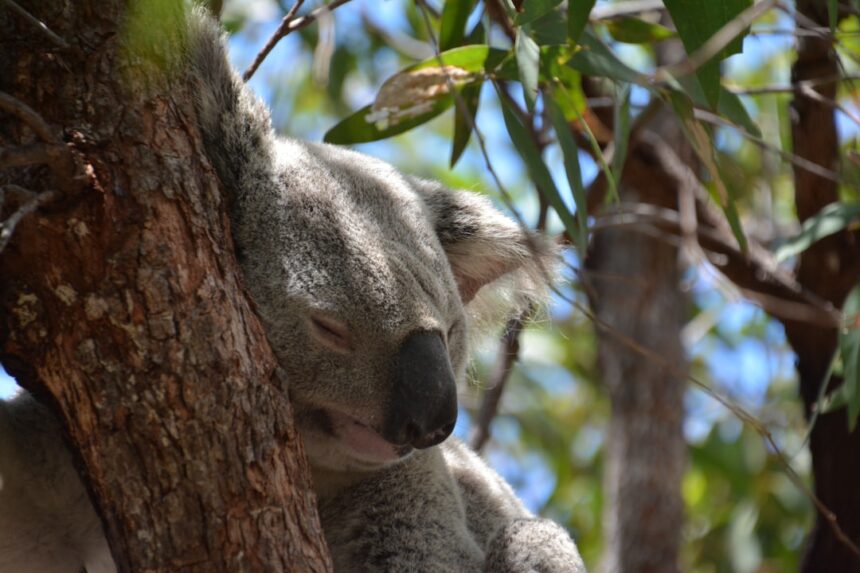
Population bottlenecks — events that sharply reduce a species’ numbers — are among the most persistent threats in conservation biology, often leaving genetic damage that outlasts the crisis itself. A genomic study published in Science now suggests that koalas, whose populations collapsed dramatically, may be finding a biological path out of that damage.
The research, led by Collin Ahrens and colleagues, analyzed whole genome data from 418 koalas across 27 populations in Australia. According to the announcement, the study used the species’ documented history of decline and subsequent rebound as a natural experiment in genetic recovery. The findings show that although koalas still carry relatively low genetic diversity as a legacy of their past collapse, signs of recovery are now detectable across several populations.
The mechanism the researchers identify is recombination — the biological process by which existing DNA sequences are reshuffled into new combinations during reproduction. The study suggests that as koala numbers have grown, recombination has increased in frequency, generating new genetic arrangements from the limited material that survived the bottleneck. This process, the researchers say, may be partially restoring the functional diversity that the population lost.
Why Genetic Bottlenecks Are Difficult to Escape
A bottleneck does more than reduce raw numbers. It compresses the genetic variation available to a species, increases inbreeding, and over time can lower fertility and survival rates. Scientists describe the worst-case trajectory as an “extinction vortex,” in which declining population size and deteriorating genetic health reinforce each other. The concern is not merely that a species becomes rare — it is that rarity itself accelerates biological decline.
Established scientific theory holds that larger populations allow more opportunities for genetic reshuffling and the accumulation of new mutations. The koala study provides empirical support for that framework: even populations that bottlenecked severely can, if they recover quickly enough and reach sufficient size, begin to offset the genetic costs of that earlier crash.
Implications for Conservation Strategy
The practical significance of the findings extends beyond koalas. Conservation programs for vulnerable species have long prioritized slowing population decline. This research adds weight to the case for also focusing on the speed and scale of recovery, not only as a demographic goal but as a mechanism for genetic repair. The study indicates that rapid demographic expansion can serve as a buffer against the long-term evolutionary consequences of severe population loss.

Koalas remain a species with low genetic diversity relative to their pre-bottleneck state, and the research does not suggest their recovery is complete. What it does establish, according to the study published in Science under DOI 10.1126/science.adz1430, is that the trajectory is measurably improving — and that the biological mechanism driving that improvement is already active across multiple Australian populations.
Photo by Fabiana Rizzi on Unsplash
This article is a curated summary based on third-party sources. Source: Read the original article