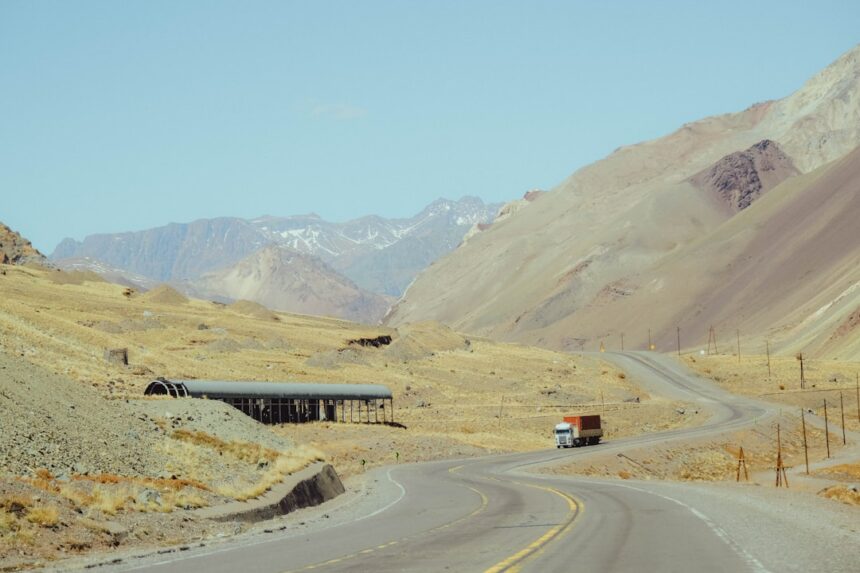
Autonomous trucking is advancing toward fully driverless commercial operations, with multiple companies targeting 2026 as the year long-haul freight loses its safety driver.
Kodiak AI is among them, planning to remove drivers from its long-haul trucks entirely by the end of 2026. But according to CEO Don Burnette, the technology itself is the easier problem. Speaking in a recent interview, he argued that operating a commercially viable autonomous trucking business — who owns the trucks, what uptime customers expect, what freight actually moves — is the challenge his competitors are not talking about. “So you start to very quickly realize that it’s not just does the truck operate safely on the road… that’s table stakes,” Burnette said. “What really matters to customers is how efficiently and effectively can I get that truck into and out of my operation.”
The company, founded in 2018 by Burnette and Paz Eshel following Burnette’s tenure at Google’s self-driving car project, currently operates 20 driverless trucks in the Permian Basin of West Texas and eastern New Mexico, running deliveries for Atlas Energy Solutions. Those deployments began in 2025 and represent what the company describes as industrial, off-road environments — complex, unpredictable terrain that Burnette calls “unstructured.” His argument is that mastering unstructured environments has made the trucks more capable on highways, which by comparison are highly predictable.
Kodiak went public through a reverse SPAC merger in September 2025.
Before removing drivers on public roads, the company must complete its safety case — a process involving extensive data collection, simulation testing, and documented risk mitigation planning. Burnette says the team’s history at Waymo directly shaped how rigorously the company approaches this requirement.
An Aftermarket Model, Customer-Owned Trucks
Where Kodiak diverges most sharply from competitors is in its commercial structure. Rather than waiting for original equipment manufacturers to deliver autonomous-ready vehicles, the company developed an aftermarket solution alongside partners including Roush Industries and Bosch, producing what it describes as fully compliant, automotive-grade trucks. The 20 trucks currently in operation are owned by customers, not by Kodiak itself — a deliberate choice with significant operational consequences.
When a customer owns the asset, metrics like utilization, uptime, and maintenance become non-negotiable from day one. Burnette draws a direct contrast with rivals whose fleets remain company-owned: a developer operating its own trucks can manage deployments on its own schedule, absorbing downtime without commercial consequence. A customer who has purchased or leased the vehicle cannot. “When a customer owns the vehicle, it has to work,” Burnette said. “Customers are going to expect the truck to work all the time. So you’ve got to hit that bar before you can really sell a truck to the customer.”
That pressure, in Burnette’s framing, enforces a discipline that self-managed deployments do not.
The Driverless Threshold
Kodiak currently operates across industrial, off-road, and defense applications, with highway freight as the next step. The company’s stated goal is to pull the driver from public road operations before the year ends — though Burnette is clear that reaching that milestone means nothing commercially unless the product is genuinely driverless. “Remember the product isn’t valuable unless it’s driverless,” he said.
With Aurora planning hundreds of autonomous truck deployments and Waabi expanding into robotaxis, the competitive pressure to demonstrate real-world, revenue-generating driverless operations is building across the sector. Kodiak’s answer to that pressure is rooted not just in when the driver comes out, but in whether the truck works reliably once they do.
Photo by Joao Vitor Marcilio on Unsplash
This article is a curated summary based on third-party sources. Source: Read the original article