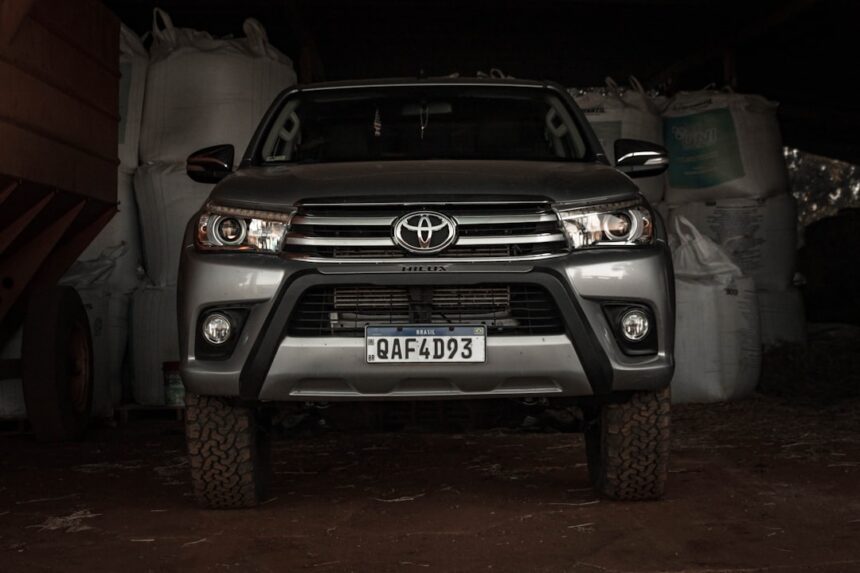
Tesla, Ford, and Volvo lead a new ranking of 18 global automakers assessed on their efforts to eliminate carbon emissions, environmental damage, and human rights violations from their supply chains. Toyota, the world’s largest automaker by sales, sits near the bottom of the list alongside Chinese state-owned manufacturers.
The rankings were compiled by Lead the Charge, a global coalition that includes the Sierra Club, The Sunrise Project, and Public Citizen. This is the fourth annual edition of the report, which grades automakers on supply chain practices spanning decarbonization, responsible mineral sourcing, and respect for indigenous peoples’ rights.
No One Has Cleared the Bar
Despite measurable progress across the industry, not a single automaker has scored above 50 percent on clean supply chain practices. Tesla came closest at 49 percent. Automakers have nearly doubled their overall scores since the ranking launched, and twice as many companies now have policies addressing indigenous peoples’ rights compared to the first edition.
Five companies — Ford, Volvo, Tesla, Mercedes, and Volkswagen — have advanced at roughly double the pace of the remaining 13 automakers since 2023, according to Lead the Charge. Volvo and Mercedes have made notable investments in steel and aluminum decarbonization. Mercedes, Volkswagen, and Tesla have each released detailed raw material sourcing reports.
Toyota Trails the Field
Toyota’s position near the bottom places it alongside GAC and SAIC, two Chinese state-owned manufacturers. Lead the Charge says these companies have “made little to no progress in areas such as steel and aluminum decarbonization or responsible mineral sourcing.”
Toyota has announced plans for several new electric vehicles in recent months, but those commitments have not yet translated into measurable supply chain improvements under the coalition’s criteria.

Chinese Automakers Show Movement
Not all Chinese companies performed poorly. Geely and BYD received specific recognition for developing new best practices and codes of conduct around material sourcing, signaling a shift in how major Chinese manufacturers are approaching supply chain accountability.
EVs Cited for Broader Progress
The report singles out electric vehicles for meaningful advances in decarbonization, recycling, transparency, and responsible sourcing. Lead the Charge argues that EVs remain a superior choice for most consumers even as government subsidies shrink and political opposition to clean energy policy grows in the United States.
The coalition does not factor in the broader activities of automakers’ affiliated figures. Elon Musk‘s other ventures, including xAI, are currently operating dozens of methane gas turbines across data centers in Memphis, Tennessee, and Southaven, Mississippi. The report also does not address Musk’s alignment with the Trump administration’s rollback of environmental regulations. Those considerations fall outside the ranking’s defined scope, which focuses solely on automotive supply chains.
Photo by Cassiano K. Wehr on Unsplash
This article is a curated summary based on third-party sources. Source: Read the original article