NASA has restructured its Artemis program, removing the planned crewed moon landing from Artemis 3 and pushing it to Artemis 4, now targeted for 2028. The announcement came from NASA Administrator Jared Isaacman on February 27, marking a significant shift in the agency’s approach to returning humans to the lunar surface.
Under the revised plan, Artemis 3 will instead serve as an Earth-orbit rendezvous between NASA’s Orion spacecraft and one or more of the program’s Human Landing System vehicles, expected no earlier than 2027. The actual first moon landing moves to Artemis 4, with a potential second landing that same year under Artemis 5.
The decision reflects mounting concerns about technical readiness. A recent report from NASA’s Aerospace Safety Advisory Panel had raised serious doubts about the previous mission architecture, specifically citing the Human Landing System’s dependence on unproven technology as posing “significant risks at the mission level.” The original Artemis 3 mission carried an unusually long list of technological firsts, many of them stacked on top of each other with little margin for error.
“This is just not the right pathway forward,” Isaacman said. “Going right to the moon is not a pathway to success.”
Both private landers selected by NASA have fallen behind schedule. SpaceX’s Starship, contracted to carry astronauts on Artemis 3 and 4 missions, has completed 11 suborbital test flights but has not yet demonstrated several capabilities required for crewed lunar landings. Blue Origin’s Blue Moon lander, selected for Artemis 5, has a pathfinder vehicle currently undergoing testing at NASA’s Johnson Space Center in Houston. Before either vehicle can carry astronauts to the surface, both must prove they can transfer and store cryogenic propellants in space, rendezvous and dock with Orion, and complete an uncrewed lunar landing followed by a successful ascent back to orbit.
Artemis 3 now becomes the mission where those demonstrations happen — without astronauts on the surface. A proving ground rather than a destination.

Beyond the mission sequence, NASA is also making changes to the Space Launch System itself. The rocket’s design will be standardized to streamline manufacturing, and the launch cadence is being accelerated from roughly once every three years to once every ten months, contingent on workforce expansion. Isaacman said NASA intends to grow its team specifically to rebuild “core competencies” that support that faster pace.
Engineers are currently addressing technical issues with the Artemis 2 SLS rocket ahead of its crewed lunar flyby mission. That work, running in parallel with the broader program review, appears to have informed how officials are now thinking about everything that follows.
The restructured plan is a response to complexity more than failure. The original Artemis 3 profile demanded simultaneous success across multiple systems, many of which remain in active development. By separating orbital demonstrations from surface landings, NASA is trying to reduce the chances that a single delay or technical shortfall collapses the entire sequence.
Whether the new timeline holds depends on how quickly Starship and Blue Moon can clear their remaining technical hurdles — and how much room NASA is actually willing to give them.
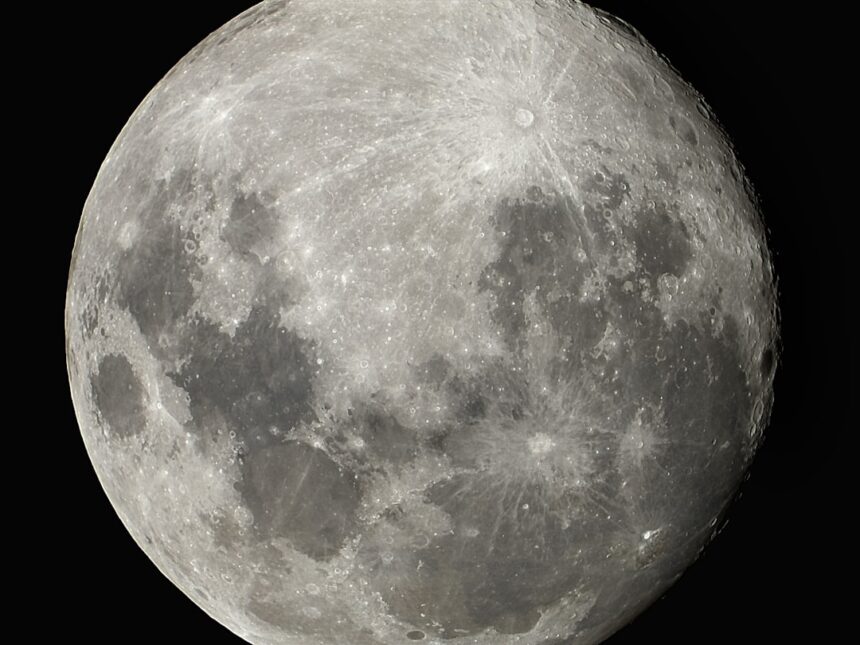
Photo by Marilena Naël on Unsplash
This article is a curated summary based on third-party sources. Source: Read the original article