Eighteen U.S. states sit above the aurora view line this weekend, from Alaska down to Illinois — a span that reflects something worth watching in the data coming out of NOAA’s Space Weather Prediction Center.
Several coronal mass ejections are currently hitting Earth, with more on the way. A CME that erupted on March 18 is expected to deliver a more direct impact on March 21, arriving in tandem with a high-speed solar wind stream flowing out of a coronal hole. That combination is what forecasters say could push geomagnetic activity into G3 territory — a strong storm level — on Friday, after a moderate G2 storm watch already covers the March 20-21 window.
The first CME in the sequence appears to have already grazed Earth.
What makes this weekend different from a typical aurora event is the sequencing. Minor to moderate geomagnetic storming — G1 to G2 — is expected Thursday night, according to the announcement, with conditions potentially intensifying rather than tapering as the weekend progresses. Elevated activity is forecast to linger into March 22, though at gradually easing G1 levels by that point. The window is longer than a single-night event, which gives aurora chasers across the northern tier of the country multiple chances to catch a display.
The 18 states currently appearing fully or partially above the aurora view line are Alaska, North Dakota, Minnesota, Montana, Washington, Idaho, Wisconsin, South Dakota, Michigan, Maine, Vermont, New Hampshire, Oregon, Wyoming, Iowa, Nebraska, New York, and Illinois. That list is drawn from NOAA’s forecast map as of publication and could shift — in either direction — depending on how geomagnetic conditions actually develop.
When to Look
According to the report, the most active viewing window Thursday runs from 2:00 p.m. to 8:00 p.m. EDT (1800–0000 GMT), when moderate G2 storming is possible, and again from 11:00 p.m. to 5:00 a.m. EDT (0300–0900 GMT) into Friday morning. A quieter stretch of minor G1 activity is forecast between those two peaks, from 8:00 p.m. to 11:00 p.m. EDT.

How to Improve Your Odds
Distance from city lights is the single biggest factor for observers in eligible states. A dark location with an unobstructed view to the northern horizon gives the best chance of seeing anything, particularly for observers near the southern edge of the forecast zone, where the aurora arc will sit low in the sky. Camera sensors — especially on smartphones in night mode — often detect auroras before the naked eye does, so pointing a camera north before assuming there’s nothing to see is worth the effort.
If G3 conditions materialize on March 21, the visible zone could extend well south of the 18 states currently listed.
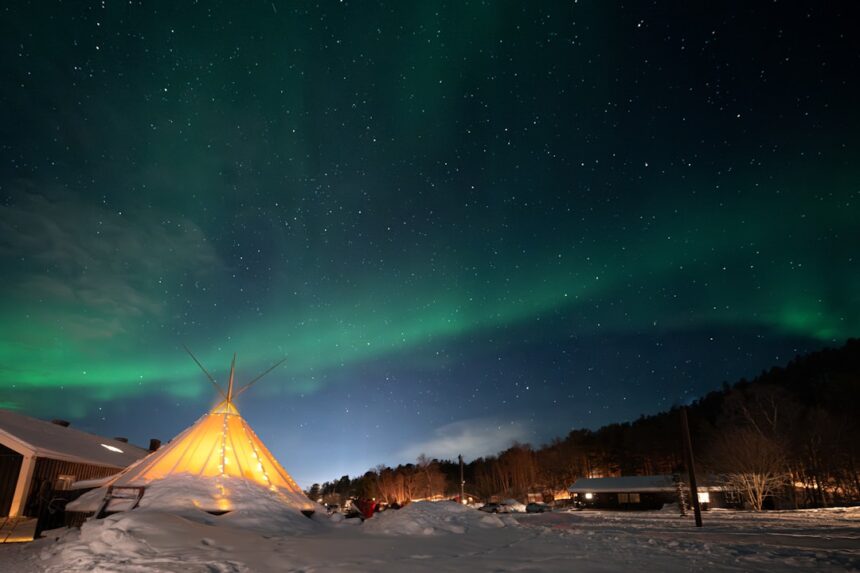
Photo by Ken Cheung on Unsplash
This article is a curated summary based on third-party sources. Source: Read the original article