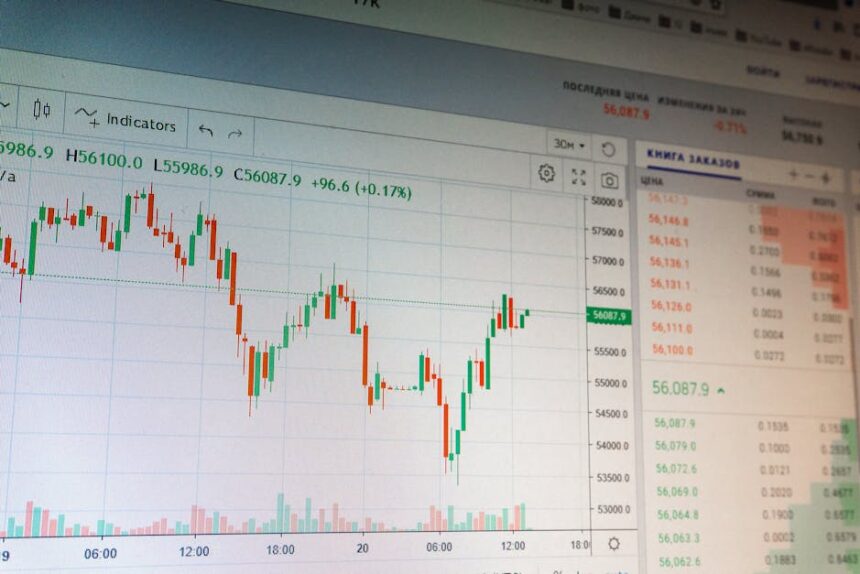
Solana decentralized application revenue fell to $22 million in its worst month in 18 months, as derivatives data points toward a potential retest of the $80 price level for SOL.
The figure marks a sharp decline from $36 million two months prior, according to the report. The broader market has weakened simultaneously — BNB Chain revenue dropped 52% over the same period — but Solana carries a structural problem the broader downturn does not fully explain.
Perpetual contracts have become the dominant revenue engine across decentralized finance, and Solana has lost meaningful ground there. Platforms including Hyperliquid, Edgex, and Zklighter now collectively control more than 80% of the decentralized perpetuals market. Hyperliquid recently added licensed S&P 500 perpetual contracts, drawing traders seeking broader asset exposure. Solana’s spot decentralized exchanges — led by Raydium and Orca — retain solid volume, but spot trading generates a fraction of the fees that perpetuals do.
Liquidity remains on the network. The revenue is going elsewhere.
SOL is trading at $87, down roughly 70% from its all-time high. Derivatives markets reinforce the bearish read. Funding rates on SOL perpetuals sit near 0%, well below the approximately 9% that characterizes normal market conditions — a signal that traders are not positioning long. Options markets reflect the same sentiment: delta skew has reached 12%, with put options trading at a premium over calls, indicating that large participants are paying to protect against further downside.
Key Levels to Watch
A daily close below $87 opens a path to $80, the next meaningful support level. Bulls need a reclaim of $100 — and a sustained hold above it — to shift the near-term outlook. Neither condition is close to being met.
More Read

The revenue collapse matters beyond price. DApp income reflects genuine protocol usage and fee generation. When that number drops to an 18-month floor while competing networks capture the highest-margin activity, the pressure on token price is not purely sentiment-driven. It reflects where traders and liquidity are actually moving.
The Perps Problem
Perpetual futures have reshaped which chains generate meaningful on-chain revenue, and Solana has not kept pace with platforms built specifically around that product. The networks winning that race — Hyperliquid in particular — have expanded their asset offerings aggressively, pulling volume that might otherwise have stayed on broader-purpose chains. Solana’s architecture has not been the barrier; its DApp layer simply has not produced a perpetuals platform capable of competing at that scale. Until one emerges, or until spot volume alone proves enough to stabilize revenue, the gap between liquidity presence and fee capture is likely to persist.
Disclaimer: The information provided in this article is for educational and informational purposes only and does not constitute financial or investment advice.
This article is a curated summary based on third-party sources. Source: Read the original article