Paleontologists working in Arizona’s Petrified Forest National Park have been steadily expanding the picture of life in the Triassic period — and a newly identified reptile is now adding a striking piece to that picture.
Researchers Elliott Armour Smith and Christian Sidor of the University of Washington excavated Kaye Quarry, a site composed of mudstones and sandstones deposited by a river approximately 215 million years ago. From more than 3,000 bones belonging to early crocodile relatives known as shuvosaurids, the pair identified a new species: Sonselasuchus cedrus. Over 950 of those bones belonged to it.
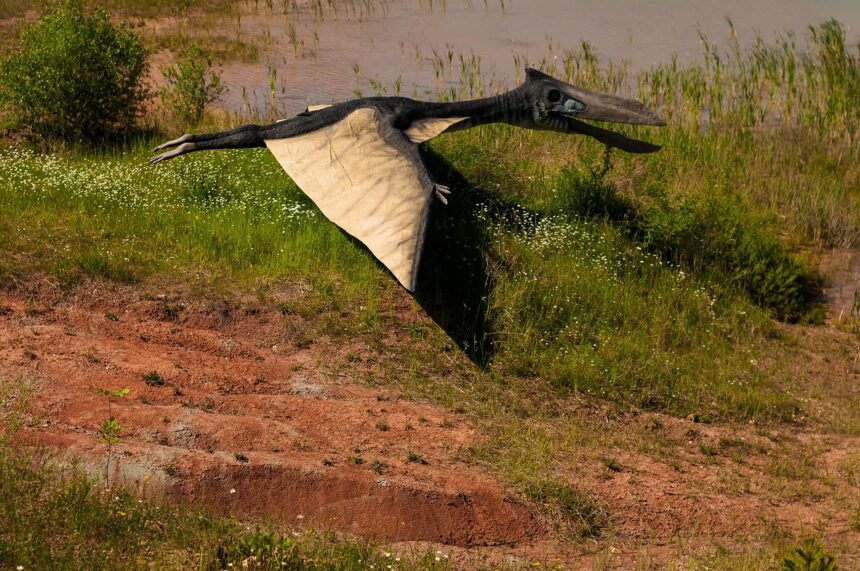
The animal looked nothing like a modern crocodile. It had short arms, no teeth, and a beak — more closely resembling a flightless bird or a theropod dinosaur than anything in today’s rivers. Michelle Stocker of Virginia Tech describes shuvosaurids plainly: “They’re absolute weirdos that live in the late Triassic. They really look like dinosaurs.”
A Body That Changed Shape Through Life
What makes S. cedrus particularly notable is how it moved — and how that changed as it aged. Bone analysis across individuals of different sizes reveals that juveniles walked on all fours, while adults shifted to two legs. The mechanism behind the transition is straightforward: the front and rear limbs simply grew at different rates.
“The forelimb starts out like 75 per cent the length of the hind-limb, and then it ends up being more like 50 [per cent],” Armour Smith says. In older individuals, the femurs became noticeably thick and showed signs of bearing significantly more weight. The forelimbs, by contrast, remained slender — “even the largest humerus is relatively delicate,” according to Armour Smith.
This kind of developmental shift is unusual, though not without precedent. A 2019 study identified two dinosaur species — a sauropodomorph and an early ceratopsian — that made a similar quadrupedal-to-bipedal transition during growth.
Crocodile Relatives Were Doing It First
The broader significance, according to Stocker, is what the find says about pseudosuchians — the reptile lineage that includes modern crocodiles. That group is often cast as evolutionary bystanders during the dinosaur era, while birds and other dinosaurs get credit for anatomical variety. The evidence, she argues, runs the other way.
“They’re actually doing a lot of the really unique, crazy stuff first, and then dinosaurs are picking it up later,” Stocker says. Shuvosaurids most resemble ornithomimids, ostrich-like dinosaurs from the late Cretaceous — animals that lived more than 100 million years after the shuvosaurids themselves.
Stocker also notes that juveniles and adults of the species may have lived largely separate lives and eaten different diets, a pattern seen in some crocodilians today.
The findings are published in the Journal of Vertebrate Paleontology.
Photo by Pixabay
This article is a curated summary based on third-party sources. Source: Read the original article