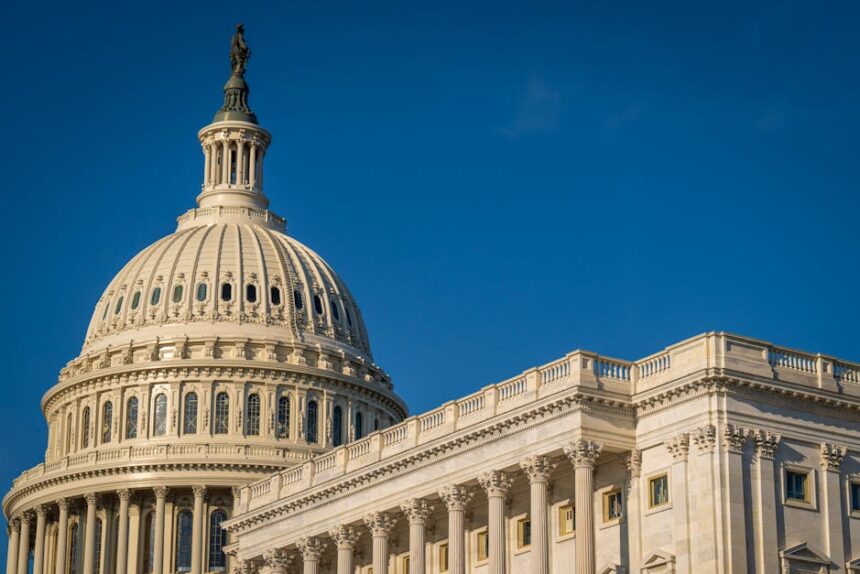
Twenty-nine members of Congress are demanding a permanent ban on a US central bank digital currency, warning that a Senate proposal blocking one only until 2031 leaves Americans exposed to unconstitutional surveillance.
Congressman Michael Cloud addressed a letter Friday to House Speaker Mike Johnson and Senate Majority Leader John Thune, signed by 28 fellow members, declaring that “a prohibition of a Central Bank Digital Currency must be permanent.” The letter states CBDCs “would expose Americans to unconstitutional financial surveillance and give the unelected Federal Reserve unprecedented power over Americans’ finances that would violate their civil liberties and financial freedom.”
The trigger is a proposed amendment to the Federal Reserve Act embedded in the 300-page “21st Century ROAD to Housing Act” (HR 6644), released Monday by the Senate Committee on Banking, Housing, and Urban Affairs. The amendment bars the central bank from issuing a CBDC — but only through 2031.
A “Watered-Down” Substitute
The lawmakers argue the housing bill’s language dilutes the “Anti-CBDC Surveillance State Act” (HR 1919), introduced by Congressman Tom Emmer in June 2025. That bill passed the House on July 17 but has not cleared the full Senate. According to the letter, the amended version also fails to stop the Federal Reserve from studying a CBDC — a gap the signatories say HR 1919 explicitly closes.
“The strong language of H.R.1919 must be restored,” the letter states.
The letter calls a CBDC “inherently anti-American” and warns the issue must be resolved “before it is too late” — language that reflects the group’s concern that a time-limited ban could be reversed or simply expire without further congressional action.
More Read
Stalled Legislation in the Background
A standalone measure, the No CBDC Act (S 464), was introduced by Senator Mike Lee in February 2025, targeting both the Federal Reserve and the Treasury Department. It stalled in Congress without advancing.
The convergence of multiple bills — HR 1919 passing the House, S 464 stalling in the Senate, and now a temporary prohibition appearing inside unrelated housing legislation — reflects a pattern where CBDC restrictions clear one chamber or committee, then lose force or get diluted in the next stage.
Cloud’s letter frames the current moment as a decision point, arguing that partial measures create the risk of a future administration or Federal Reserve board revisiting the question once a statutory window closes. The signatories are pressing leadership to restore the full prohibition rather than accept a provision that, by design, lapses.
Disclaimer: The information provided in this article is for educational and informational purposes only and does not constitute financial or investment advice.
Photo by Mark Stebnicki on Pexels
This article is a curated summary based on third-party sources. Source: Read the original article