Humans are the only primates with a chin, and biologists have spent decades arguing over why. A new study suggests the answer is simpler, and stranger, than most theories proposed: the chin probably has no purpose of its own.
Research published by Noreen von Cramon-Taubadel at the University at Buffalo and her colleagues analyzed 532 skulls from humans and 14 other species and subspecies of modern apes, including chimpanzees, bonobos, gorillas, orangutans, and gibbons. The team measured 46 distances between precise anatomical landmarks across the head and jaw, with nine of those measurements focused specifically on the chin region.
What the data actually showed
The researchers mapped their measurements onto an evolutionary tree and used a standard quantitative genetic model to test whether changes along each family branch were greater or smaller than expected under random drift alone. The results were revealing. Of the nine chin-related traits they examined, only three showed signs of direct natural selection. The remaining six appeared to be either unaffected by selection or simply by-products of evolution driven by changes elsewhere in the skull.
“There has been a tendency to assume that every feature that differs significantly between species has been shaped by natural selection for a specific purpose, but this ‘purposeful’ view of evolution is inaccurate,” von Cramon-Taubadel said. “Evolution is often messier and less directed than people expect or assume.”
A cascade of unrelated changes
The explanation the study points toward is structural. As human ancestors became more upright, the base of the skull flexed, and the face tucked beneath the braincase rather than projecting forward as it does in chimpanzees. At the same time, larger brains and shifting diets reduced the need for large front teeth and powerful chewing muscles, shrinking the lower face and jaw overall. The upper jaw bones receded. The lower jaw, comparatively, began to project beyond the teeth. The chin emerged not by design, but by default.
In other words, selection pressure on posture, brain size, and diet produced the chin as an incidental outcome.

The concept of evolutionary spandrels
Traits that arise this way are sometimes called spandrels, a term borrowed from architecture, where it describes the spaces that appear as a consequence of the shapes of arches and other structural elements. The human navel and the small arms of certain dinosaurs are cited as comparable examples of form following function elsewhere in the body.
Alessio Veneziano at the French National Museum of Natural History in Paris described the findings as compelling. “It’s always fascinating for me to see confirmation of important evolutionary trends occurring non-adaptively,” he said, calling the chin “a textbook example” of non-adaptation.
The study does not entirely rule out that some aspects of the chin served a functional role. Three of the nine measured traits still showed signatures of direct selection, meaning the full picture remains open. But the dominant story the data tells is one of structural consequence, not purposeful adaptation.
For a feature long used as a defining marker of Homo sapiens, the chin may be less a signature of human identity and more an accident of becoming human at all.
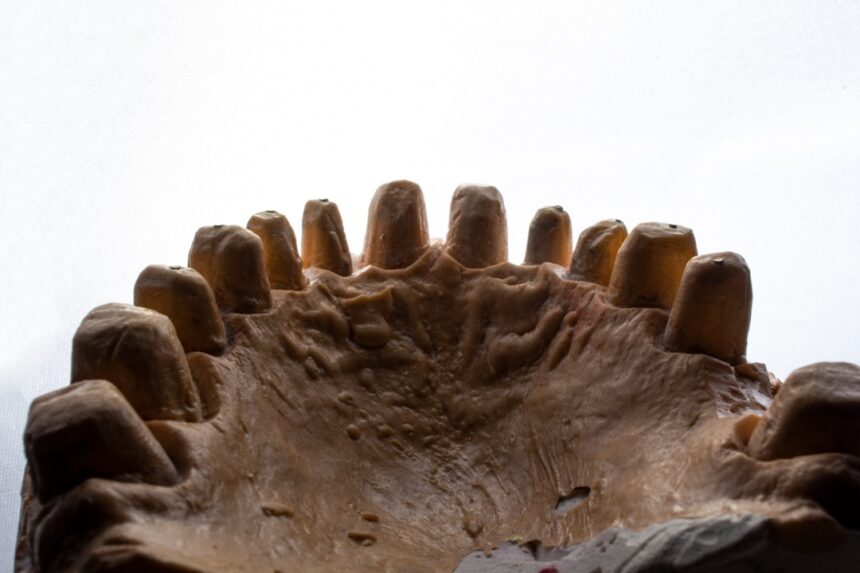
Photo by Ozkan Guner on Unsplash
This article is a curated summary based on third-party sources. Source: Read the original article